
The Gut-Brain Connection: How Your Gut Affects Your Mood and Mind
Disclaimer: This page is for informational purposes only and is not medical advice. If you are experiencing anxiety, depression, or other mental health concerns, please speak with a qualified healthcare provider.
What You Will Learn in This Guide
- What the gut-brain connection actually is
- The vagus nerve – the highway between your gut and brain
- Why your gut produces most of your body’s serotonin
- How gut health affects anxiety, depression, and brain fog
- The role of stress and how it damages your gut in return
- Practical steps to improve both your gut and mental health at the same time
The Discovery That Changed How I Think About Health
When I was in the middle of my worst gut health period, I was also going through one of the most anxious stretches of my life.
I assumed those two things were separate. Stress was causing my gut problems. That made sense to me. The gut issues were just a downstream effect of a busy, stressful life.

Then I learned something that completely flipped that idea around.
The gut does not just react to what the brain tells it. The brain also reacts to what the gut tells it. And in fact, most of the communication flows from the gut upward not the other way around.
That was the moment gut health stopped being just a digestive issue for me. It became something much bigger.
What Is the Gut-Brain Connection?
The gut-brain connection is the two-way communication system between your digestive tract and your brain.
These two organs are in constant contact. They send signals back and forth all day long every single day of your life. When something goes wrong in the gut, the brain hears about it. When the brain is under stress, the gut feels it.
Scientists call this the gut-brain axis.
It is not a metaphor. It is a real, physical network of nerves, hormones, and chemical signals connecting your digestive system to your central nervous system.
And once you understand how it works, a lot of things start to make sense: the anxiety that flares alongside digestive problems, the brain fog that comes with bloating, the way a stressful week can wreck your gut for days afterward.
The Enteric Nervous System - Your Second Brain
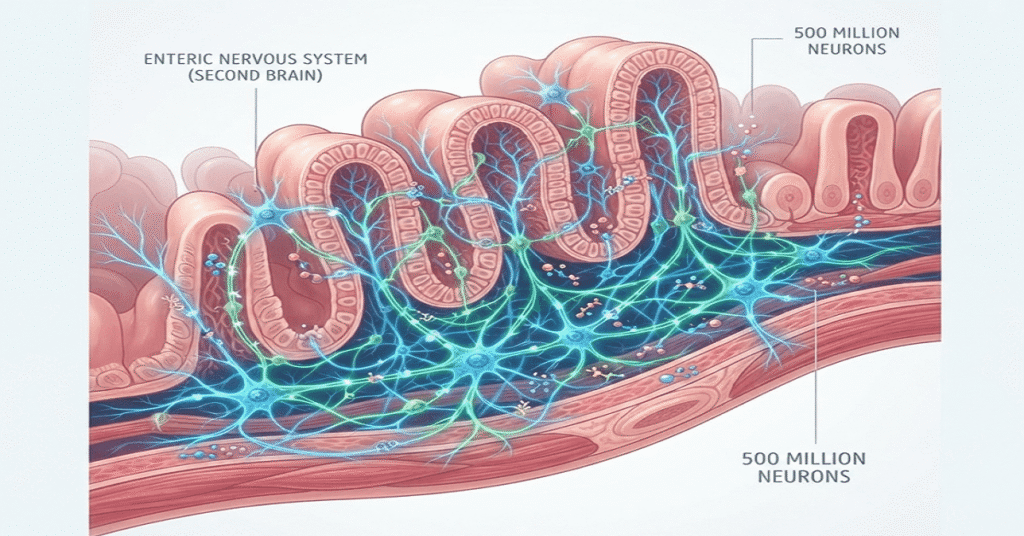
Here is something most people have never heard of: your gut has its own nervous system.
It is called the enteric nervous system. It is a network of around 500 million nerve cells embedded in the lining of your digestive tract from your esophagus all the way to your large intestine.
That is more nerve cells than in your spinal cord.
The enteric nervous system controls all the complex functions of digestion (muscle contractions, enzyme secretion, blood flow, the whole mechanical process of moving food through your body). And it does all of this largely on its own, without waiting for instructions from the brain.
This is why scientists call it the “second brain.” Not because it thinks or makes decisions. But because it is a sophisticated, semi-autonomous nervous system that rivals the spinal cord in complexity.
And it is in direct communication with your actual brain at all times.
The Vagus Nerve - The Highway Between Gut and Brain
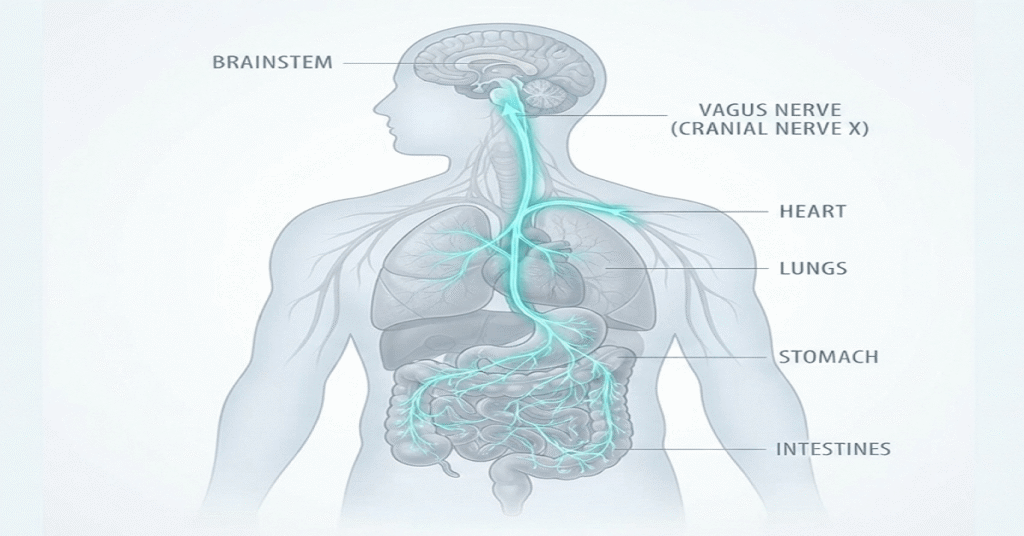
The main communication channel between your gut and your brain is the vagus nerve.
The vagus nerve is the longest nerve in the body. It runs from the brainstem all the way down through the chest and into the abdomen, connecting the brain to the heart, lungs, and digestive system.
Think of it as a two-lane highway. Information can travel in both directions.
But here is the part that surprises most people: about 80 to 90 percent of the signals on that highway travel from the gut upward to the brain not the other way around.
Your gut is not just passively waiting for instructions. It is actively reporting back to your brain constantly. The state of your gut (how balanced your microbiome is, whether your gut lining is healthy, what you just ate) all of this information flows up to the brain and influences how you think, feel, and function.
Your Gut Makes Most of Your Serotonin
This is the fact that stops most people in their tracks when they first hear it.
Your gut produces approximately 90 to 95 percent of the serotonin in your body.
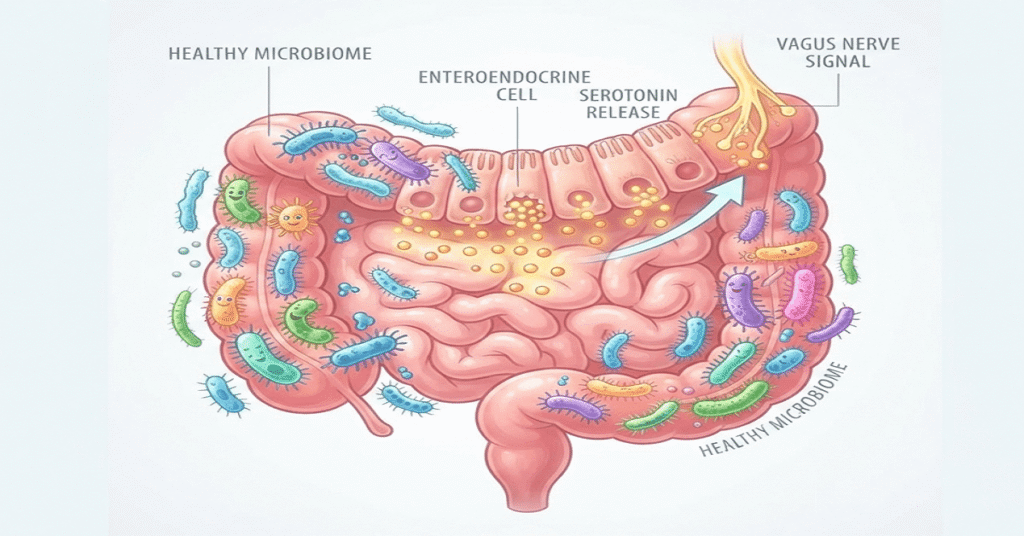
Serotonin is the neurotransmitter most closely associated with mood, emotional well-being, and mental stability. It is the chemical that most antidepressants are designed to work with.
Most people assume serotonin is made in the brain. But the majority of it is produced in the gut specifically by specialized cells in the gut lining, working in close relationship with the gut microbiome.
Gut bacteria play a direct role in stimulating serotonin production. When the gut microbiome is diverse and healthy, serotonin production tends to be well-regulated. When the microbiome is disrupted (through poor diet, stress, antibiotics, or infection) serotonin production can be affected too.
This is not a fringe idea. It is established science. And it explains something a lot of people have noticed without fully understanding: that improving gut health often improves mood.
Other Brain Chemicals Made in the Gut
Serotonin is the most well-known, but it is not alone.
The gut and its microbiome are involved in producing or regulating several other neurotransmitters that directly affect how you feel and think:
Dopamine: the neurotransmitter associated with motivation, reward, and pleasure. About 50 percent of the body’s dopamine is produced in the gut.
GABA (gamma-aminobutyric acid): the main calming neurotransmitter in the brain. Certain gut bacteria produce GABA directly. Low GABA is associated with anxiety and stress sensitivity.
Norepinephrine: involved in alertness, focus, and the stress response. Also produced in the gut.
Short-chain fatty acids (SCFAs): produced when gut bacteria ferment dietary fiber. SCFAs like butyrate cross the blood-brain barrier and directly influence brain function, mood regulation, and neuroinflammation.
What this tells us is that the gut is not just a digestive organ. It is one of the most significant chemical factories in the entire body — and the chemicals it produces have a direct line to your emotional and cognitive experience.
Gut Health and Anxiety
Anxiety and gut problems are extraordinarily common companions. Study after study shows that people with IBS, gut dysbiosis, and other digestive conditions have significantly higher rates of anxiety than the general population.
For a long time, the assumption was that anxiety caused the gut problems. People are stressed and anxious, so their gut acts up.
That is partly true. But the research now shows the relationship runs both ways and in many cases, gut dysfunction may actually be driving the anxiety, not just reacting to it.
Here is how it works:
When the gut microbiome is disrupted (through poor diet, inflammation, or leaky gut) it changes the signals being sent up the vagus nerve to the brain. It alters GABA production. It affects serotonin regulation. It increases systemic inflammation, and inflammation in the body is directly linked to increased anxiety and fear responses in the brain.
The gut is essentially sending the brain distress signals. And the brain responds the way it always does to distress signals with anxiety.
Several human studies have shown that improving the gut microbiome (through dietary changes, prebiotics, and specific probiotic strains) measurably reduces anxiety scores in participants. Not dramatically in every case. But consistently enough to support the connection clearly.
See: How Your Gut Health Affects Your Anxiety – The Research Explained
Gut Health and Depression
The link between gut health and depression is one of the most actively researched areas in medicine right now.
We already know that gut bacteria are involved in producing serotonin and dopamine (two of the neurochemicals most closely tied to depression). But the connection goes deeper than that.
Neuroinflammation – inflammation affecting the brain and nervous system is now considered a significant driver of depression in many people. And one of the most consistent sources of neuroinflammation is a disrupted gut.
When the gut lining is damaged, the leaky gut condition covered in the Gut Health Conditions guide – inflammatory molecules can pass into the bloodstream and eventually reach the brain. This triggers an immune response in the brain that researchers now believe contributes directly to depressive symptoms in some people.
This does not mean depression is “just a gut problem” or that improving your diet will replace treatment for clinical depression. It absolutely will not in most cases, and that is not a responsible claim to make.
What it does mean is that for a significant subset of people (particularly those whose depression accompanies digestive symptoms or inflammatory conditions) addressing gut health may be a meaningful piece of the overall picture.
See: Gut Health and Depression: What the Microbiome-Mood Connection Means for You
Gut Health and Brain Fog
Brain fog is not a medical diagnosis. But anyone who has experienced it knows exactly what it is – heavy, cloudy, can’t-quite-think-straight feeling that makes concentration difficult and mental clarity feel out of reach.
I, too, dealt with significant brain fog during the period when my gut was at its worst. I attributed it to stress and lack of sleep. And those things were factors. But it improved alongside my gut health in a way that felt too consistent to be coincidental.
The gut-brain mechanisms behind brain fog include:
Gut dysbiosis – imbalanced gut bacteria produce metabolic byproducts that can affect brain function. Certain harmful bacteria produce compounds like D-lactic acid and ammonia that, when they enter the bloodstream, can directly impair cognitive function.
Leaky gut and neuroinflammation – inflammatory molecules crossing from the gut into the bloodstream and reaching the brain are associated with cognitive slowness and mental fatigue.
Nutrient malabsorption – when the gut lining is damaged, it absorbs nutrients less efficiently. The brain is particularly sensitive to deficiencies in B vitamins, iron, magnesium, and omega-3 fats, all of which depend on healthy gut absorption.
SIBO – small intestinal bacterial overgrowth is associated with some of the most pronounced brain fog among gut conditions. Patients often report significant cognitive improvement after successful SIBO treatment.
See: Brain Fog and Gut Health: Why Fixing Your Gut Can Clear Your Mind
Stress - The Two-Way Damage Loop
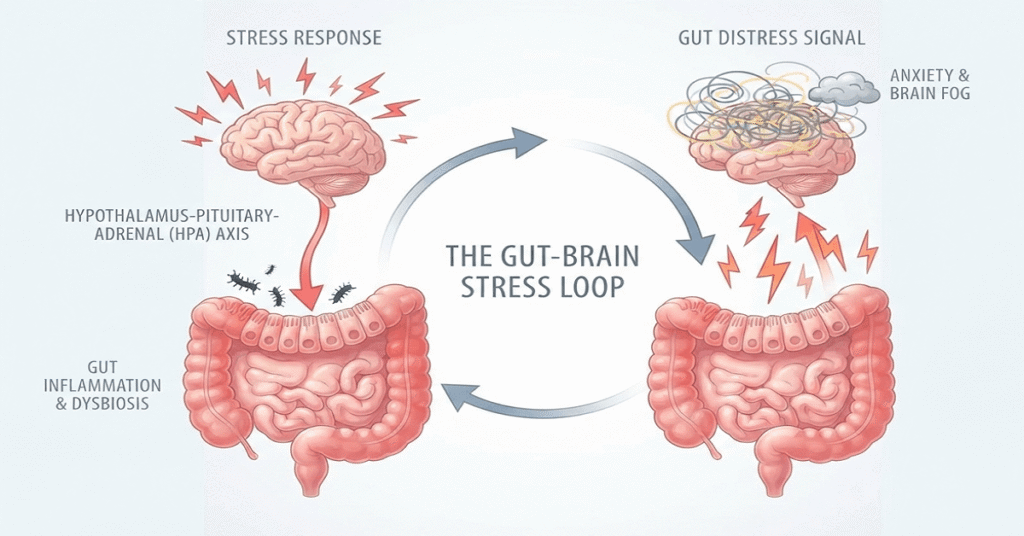
Stress is where the gut-brain connection becomes a loop (and not a helpful one!).
When you are under stress, your brain activates the sympathetic nervous system – the “fight or flight” response. This triggers a cascade of physical changes designed to help you deal with a perceived threat.
One of those changes is altered gut function. The stress response:
- Slows or disrupts normal gut motility – the muscular movements that move food through the digestive tract
- Increases gut permeability – stress hormones directly loosen the tight junctions of the gut lining
- Disrupts the gut microbiome – changing the composition of bacteria toward more harmful species
- Reduces blood flow to the gut – prioritizing muscles and vital organs instead
- Triggers mast cell activation in the gut lining – contributing to inflammation and sensitivity
So stress damages the gut. And as we have just covered – a damaged gut sends more distress signals to the brain, which increases anxiety and stress sensitivity. Which damages the gut further.
This is the gut-brain stress loop. And it is one of the most important reasons why gut health problems can be so persistent and so hard to break out of without addressing both sides.
Sleep, the Gut, and the Brain
Sleep is the third corner of this triangle.
Your gut microbiome follows a circadian rhythm – a daily biological clock that regulates which bacteria are active at which times of day. Poor sleep disrupts this rhythm, directly altering gut microbiome composition.
At the same time, the gut microbiome influences sleep quality. Gut bacteria produce melatonin precursors and regulate serotonin both of which are central to sleep regulation.
Poor gut health contributes to poor sleep. Poor sleep worsens gut health. And both poor sleep and poor gut health contribute to worse mental health outcomes.
When all three are struggling at once (gut, sleep, and mental health) it can feel impossible to know where to start. The practical answer is: start with diet and sleep together. They are the most accessible levers and they influence everything else.
See: How Poor Sleep Destroys Your Gut – and What to Do
See: Ayurvedic Practices for Better Sleep That Also Heal Your Gut
Practical Steps to Improve Both at Once
The good news about the gut-brain connection is that it works in both directions. Just as a damaged gut sends distress signals to the brain, a healing gut sends calming, stabilizing signals upward.
You do not need two separate plans: one for your gut and one for your mental health. The approaches that heal the gut also directly support brain chemistry and mental well-being.1. Change What You Eat
This is the most direct lever.
A diet rich in diverse plants, fermented foods, and prebiotic fiber feeds the gut bacteria that produce serotonin, GABA, and short-chain fatty acids. These compounds directly affect mood and cognitive function.
Reducing ultra-processed food, added sugar, and seed oils reduces gut inflammation which in turn reduces neuroinflammation.
The Mediterranean diet has the strongest research base for both gut health and mental health outcomes. It is not complicated: more vegetables, more fish, more legumes, more olive oil, less processed food.

2. Support Your Vagus Nerve
The vagus nerve is the communication cable between your gut and your brain. Practices that stimulate and strengthen vagal tone (the responsiveness of the vagus nerve) improve communication in both directions.
Deep, slow breathing is the most accessible vagus nerve stimulator. When you breathe slowly and deeply (particularly extending the exhale), you activate the parasympathetic nervous system and stimulate vagal activity. Try this: Inhale for 4 counts. Hold for 2. Exhale slowly for 6 to 8 counts. Even 5 minutes of this kind of breathing has been shown to measurably reduce cortisol and activate the calming, rest-and-digest response. Cold water on the face or a brief cold shower triggers the dive reflex, which stimulates the vagus nerve directly. Humming, singing, or gargling – these might sound strange, but the vagus nerve runs through the throat, and vibration from humming or gargling stimulates it. It is used clinically in some biofeedback approaches. See: How to Calm Your Nervous System to Heal Your Gut3. Try Specific Probiotic Strains for Mood
Not all probiotics affect mood equally. Research has identified certain strains (sometimes called psychobiotics) that specifically influence the gut-brain axis. Strains with the most research for mood and anxiety include:
- Lactobacillus rhamnosus – shown in animal and some human studies to reduce anxiety and alter GABA receptor expression
- Lactobacillus plantarum – evidence for reducing IBS symptoms and associated mood disturbance
- Bifidobacterium longum – shown to reduce stress reactivity and improve mood in healthy volunteers in clinical trials
- Lactobacillus helveticus and Bifidobacterium longum combined – this specific combination has the most robust human evidence for reducing psychological distress
4. Manage Stress at the Source
Because stress and gut health form a two-way loop, stress management is not optional for gut healing. It is a foundational part of it.
This does not have to mean meditation retreats or yoga classes though those work well for some people. It means finding what consistently brings your nervous system out of the stress response. For some people that is walking. For others it is time in nature, creative work, regular social connection, or simply protecting sleep more seriously. The specific method matters less than the consistency. Chronic stress means the stress response is barely ever switching off. Any practice that reliably interrupts that (even for 10 minutes a day) starts to shift the gut-brain dynamic. See: Stress and Gut Health: How Chronic Stress Damages Your Microbiome5. Exercise
Physical activity is one of the most powerful combined gut-brain interventions available and it is free.
Exercise directly improves gut microbiome diversity. Studies show that people who exercise regularly have more diverse and more beneficial gut bacteria than sedentary individuals, independent of diet. At the same time, exercise increases brain-derived neurotrophic factor (BDNF) – a protein that promotes the growth of new brain cells and is consistently low in people with depression and anxiety. Even moderate exercise (30 minutes of brisk walking five days a week) produces meaningful changes in both gut microbiome composition and mental health outcomes. See: Exercise and Gut Health: How Physical Activity Changes Your MicrobiomeQuick-Reference Summary
| Connection | What It Means Practically |
|---|---|
| Gut-brain axis | Your gut and brain communicate constantly through nerves, hormones, and the microbiome |
| Vagus nerve | 80–90% of signals travel from gut to brain; your gut influences your brain more than the reverse |
| Serotonin | 90–95% is made in the gut; gut health directly affects mood regulation |
| Gut and anxiety | Gut dysbiosis alters GABA and serotonin signals that contribute to anxiety |
| Gut and depression | Neuroinflammation from leaky gut and dysbiosis is a research-supported contributor to depression |
| Gut and brain fog | Dysbiosis, nutrient malabsorption, and SIBO all impair cognitive clarity |
| Stress loop | Stress damages the gut. A damaged gut increases stress sensitivity. Both need addressing. |
| Best interventions | Diet diversity, fermented foods, vagal breathing, psychobiotics, stress management, exercise |
Frequently Asked Questions
Q: Can improving gut health reduce anxiety?
A: Research suggests yes. Though results vary by individual. Multiple human studies have shown that dietary improvements and specific probiotic strains measurably reduce anxiety scores in participants over 4 to 8 weeks. The mechanism is well understood gut bacteria influence GABA production, serotonin regulation, and vagus nerve signaling, all of which directly affect anxiety. Gut health improvements work best as part of a broader approach and should complement (not replace) professional mental health support.
Q: What is the gut-brain axis?
A: The gut-brain axis is the two-way communication network between the digestive system and the central nervous system. It operates through the vagus nerve, the enteric nervous system (the gut’s own nerve network), the gut microbiome, and chemical signals including neurotransmitters and hormones. Most signals on this pathway travel from the gut to the brain meaning gut health significantly influences brain function, mood, and behavior.
Q: Does gut health affect depression?
A: The connection between gut health and depression is actively researched and increasingly supported by evidence. Gut dysbiosis and increased intestinal permeability are associated with neuroinflammation – (which is) a known contributor to depressive symptoms. Gut bacteria are also involved in producing serotonin and dopamine, both of which are central to mood regulation. For some people, addressing gut health may contribute meaningfully to improving mood alongside other treatments. Depression is a serious condition, always work with a healthcare provider.
Q: What are psychobiotics?
A: Psychobiotics are probiotic bacteria that specifically influence the gut-brain axis and have demonstrated effects on mental health outcomes in research. The term was coined by researchers in 2013. The most studied strains include Lactobacillus rhamnosus, Bifidobacterium longum, and Lactobacillus helveticus. The field is still developing, but early human trials show modest but consistent improvements in anxiety, stress reactivity, and mood scores.
Q: How does stress damage the gut?
A: When the body activates the stress response, it releases cortisol and other stress hormones that disrupt gut function in multiple ways. Stress reduces gut motility, increases gut permeability (leaky gut), alters the composition of the gut microbiome toward more harmful species, reduces blood flow to the digestive system, and triggers inflammation in the gut lining. Chronic stress (the kind sustained over weeks or months) causes cumulative gut damage that can persist even after the stressful period ends.
Q: Can diet improve mood through the gut?
A: Yes, the research on diet and mood is increasingly strong. A large 2017 clinical trial called the SMILES trial found that a Mediterranean- style dietary intervention significantly reduced depression symptoms compared to social support alone. The mechanisms align with gut-brain science: a diverse, plant-rich diet feeds gut bacteria that produce serotonin, GABA, and short-chain fatty acids – all of which directly influence brain chemistry and emotional regulation.
What to Read Next
New here? Start with the basics: Gut Health 101 – The Complete Beginner’s Guide
Want to change your diet to help your gut and mood? The Gut Health Diet – What to Eat, What to Avoid
Dealing with a specific gut condition? Common Gut Health Conditions
Want to know which supplements help the gut-brain axis? Best Gut Health Supplements – What Works, What Doesn’t
Explore more gut-brain articles: Category: Gut-Brain Connection