
Best Gut Health Supplements: What Works, What Doesn't, and What to Buy
Disclaimer: This page is for informational purposes only and does not constitute medical advice. Some links on this page are affiliate links – if you purchase through them, I may earn a small commission at no extra cost to you. I only recommend products I have personally researched. Always consult a healthcare provider before starting any new supplement.
What You Will Learn in This Guide
- Whether you actually need gut health supplements
- The supplements with the strongest research behind them
- The ones that are mostly hype and not worth your money
- What to look for when buying each supplement in the US
- Honest notes on what I have personally tried
- A clear, no-nonsense summary of what to start with
Do You Even Need Gut Health Supplements?
Let me start with something most supplement guides will not tell you.
For most people, supplements should come second. Diet and lifestyle changes come first.
I learned this the hard way. Early in my gut health journey, I spent a lot of money on supplements before I had fixed what I was eating. The results were underwhelming. Not because the supplements were bad but because I was adding them on top of a diet that was ;till working against me.
Think of it this way: supplements are like adding high quality fuel to an engine that has a leak. The fuel matters. But fixing the leak matters more.
If you have not yet read the Gut Health Diet guide, start there before spending money on anything in this guide. A good diet is the foundation. Supplements build on that foundation, they do not replace it.
That said, once the foundation is in place, certain supplements have genuinely solid research behind them and can make a meaningful difference.
This guide gives you the honest picture.
The Supplement Landscape: A Word of Caution
The gut health supplement market in the United States is enormous. It is also largely unregulated.
The FDA does not require gut health supplements to be proven safe or effective before they go on sale. This means that a supplement brand can make vague health claims like “supports digestive health,” “promotes gut balance” without providing any clinical evidence.
What this means for you practically:
- Not all probiotics are equal. Strain, CFU count, and product quality vary enormously between brands.
- Many “gut health” products on store shelves are built around marketing rather than science.
- Third-party testing certification is one of the most reliable quality signals you can look for.
In the US, look for supplements certified by:
- NSF International
- USP (United States Pharmacopeia)
- ConsumerLab
- Informed Sport (especially relevant if you are an athlete)
These third-party certifications mean an independent organization has tested the product for label accuracy and contaminants. They are not a guarantee of effectiveness but they are a strong quality signal.
The Supplements With Real Research Behind Them
1. Probiotics
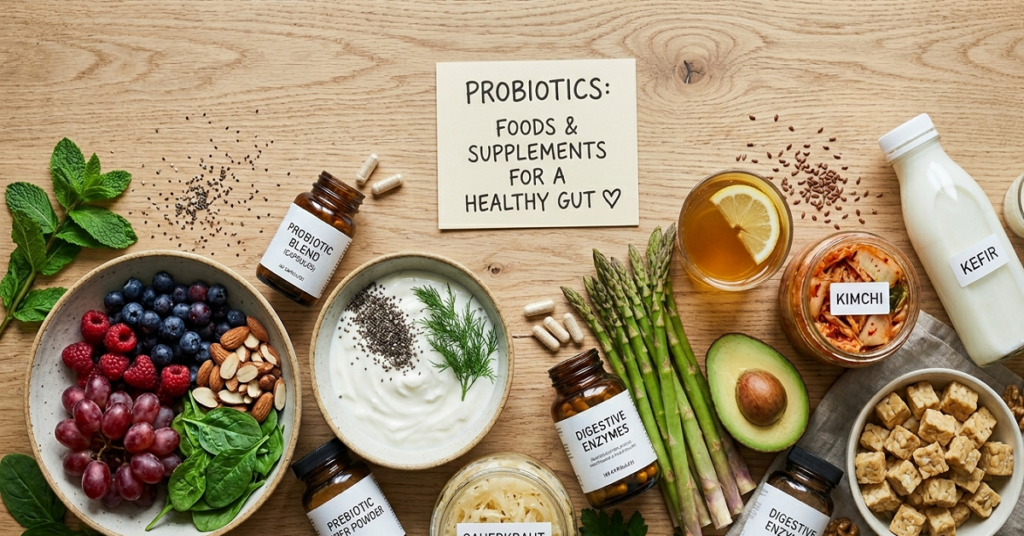
Probiotics are live bacteria taken to add beneficial microorganisms to the gut. They are the most popular gut health supplement category by far.
The research on probiotics is genuinely promising but it is also more nuanced than most marketing suggests. Not all probiotics work for all conditions. Strain specificity matters a great deal.
What the research supports:
| Condition | Strains With Evidence |
|---|---|
| General gut microbiome support | Lactobacillus acidophilus, Bifidobacterium longum, Lactobacillus rhamnosus |
| IBS symptom reduction | Lactobacillus plantarum 299v, Bifidobacterium infantis 35624 |
| Antibiotic-associated diarrhea | Lactobacillus rhamnosus GG, Saccharomyces boulardii |
| Post-antibiotic recovery | Lactobacillus rhamnosus GG, multi-strain formulas |
| Anxiety and mood support | Lactobacillus rhamnosus, Bifidobacterium longum, L. helveticus |
| Constipation | Bifidobacterium lactis, Lactobacillus casei |
What to look for when buying:
CFU count — CFU stands for colony-forming units. It is the measure of how many live bacteria are in each dose. A higher number is not always better. Most clinical research uses doses of 1 to 50 billion CFU. Products claiming 500 billion CFU are usually more marketing than science.
Strain specificity — Look for products that list the full strain name on the label. For example, Lactobacillus rhamnosus GG, not just “Lactobacillus rhamnosus.” The letters at the end identify the specific strain that was tested in research. This matters.
Shelf stability — Some probiotics require refrigeration to keep the bacteria alive. Others are shelf-stable through to the expiration date. Neither is inherently better, what matters is that the product guarantees live cultures at the time of consumption, not just at the time of manufacture.
Enteric coating — Some probiotic capsules have an enteric coating that protects the bacteria from stomach acid, allowing more of them to reach the intestine alive. This is worth looking for in more sensitive individuals.
My personal experience: I have used probiotics on and off for several years. The most noticeable difference for me came after a course of antibiotics taking a probiotic containing Lactobacillus rhamnosus GG and Saccharomyces boulardii during and after the antibiotic course made a real difference in how quickly my gut recovered. For general daily use, the benefit is more subtle but still present.
Worth trying: Yes, particularly if you have recently taken antibiotics, have IBS, or are rebuilding your gut microbiome. Choose a product with named strains relevant to your situation.
2. Prebiotics
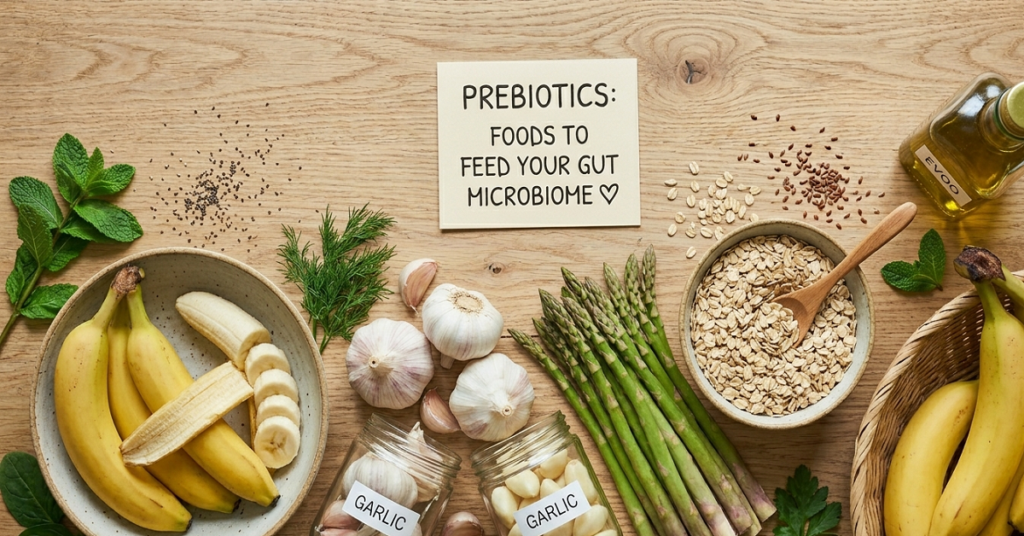
Prebiotics are not bacteria themselves. They are the specialized fibers that feed your existing beneficial gut bacteria.
If probiotics are seeds, prebiotics are the fertilizer and water that make them grow.
The research on prebiotics is strong and consistent. Specific types of prebiotic fiber (inulin, fructooligosaccharides (FOS), and galactooligosaccharides (GOS)) have been shown to:
- Increase populations of beneficial Bifidobacteria and Lactobacillus species
- Improve bowel regularity
- Reduce inflammation in the gut lining
- Support immune function
- Improve mineral absorption, particularly calcium
Types of prebiotic supplements:
Psyllium husk — the most widely available prebiotic fiber supplement in the US. Primarily soluble fiber. Excellent for improving bowel regularity in both constipation and diarrhea. Metamucil is the most recognized brand, but any pure psyllium husk powder works equally well and is often cheaper.
Inulin / FOS powder — derived from chicory root. Feeds Bifidobacteria specifically. Available as a plain powder you can add to water, coffee, or food. Start with a small dose (3 to 5 grams) and build up slowly. Too much too fast causes significant gas and bloating.
GOS (Galactooligosaccharides) — found in products like Bimuno and in infant formula. Strong evidence for increasing Bifidobacteria and reducing anxiety scores in some research.
Acacia fiber — a gentle prebiotic fiber that is generally very well tolerated even in sensitive guts. Good starting point if you are new to prebiotic supplements or have IBS.
A practical note: If you are eating a diet already rich in garlic, onions, oats, bananas, asparagus, and legumes, you may be getting enough prebiotic fiber from food. Supplements are most useful when diet alone is not covering the gap.
Worth trying: Yes, particularly if your diet is low in plants and fiber. Psyllium husk and acacia fiber are the best starting points for most people.
3. Digestive Enzymes
Digestive enzymes are proteins that help break down food. Your body naturally produces them in the saliva, stomach, pancreas, and small intestine.
When enzyme production is low (due to age, chronic gut inflammation, or certain digestive conditions) food does not get broken down properly. This can cause bloating, gas, indigestion, and nutrient malabsorption.
Types of digestive enzymes and what they do:
| Enzyme | Breaks Down |
|---|---|
| Amylase | Carbohydrates and starches |
| Protease | Proteins |
| Lipase | Fats |
| Lactase | Lactose (dairy sugar) |
| Alpha-galactosidase | Beans, lentils, cruciferous vegetables |
| Cellulase | Plant fiber and cellulose |
Who benefits most:
- People who feel bloated or gassy after most meals, particularly after protein or fat-heavy meals
- People with known or suspected low stomach acid
- Older adults: enzyme production naturally declines with age
- People who are sensitive to beans, lentils, or cruciferous vegetables
- People with diagnosed exocrine pancreatic insufficiency (EPI)
Lactase specifically is one of the most well-researched enzyme supplements. If you are lactose intolerant and want to eat dairy occasionally, lactase supplements (like Lactaid) are effective and very well supported by research.
Alpha-galactosidase — sold most commonly as Beano- breaks down the complex carbohydrates in beans and cruciferous vegetables that cause gas. Good research support for reducing gas and bloating specifically from these foods.
Broad-spectrum enzyme blends have less specific research but are widely used with good anecdotal support. They are best taken immediately before or at the beginning of a meal.
Worth trying: Yes, situationally. If you have a specific trigger (dairy, beans, large meals), there are well-researched enzymes for that trigger. A broad-spectrum blend is a reasonable experiment if digestion feels generally sluggish and heavy after eating.
4. L-Glutamine
L-glutamine is an amino acid, a building block of protein. It is the most abundant amino acid in the human body and the primary fuel source for the cells lining the intestine.
When the gut lining is damaged (as in leaky gut, IBS with diarrhea, or inflammatory conditions), glutamine plays a direct role in repair and maintenance of that lining.
The research on L-glutamine for gut health includes:
- Reduced intestinal permeability in patients with IBS-D (diarrhea-predominant IBS) in a 2019 randomized controlled trial
- Improved gut lining integrity in critically ill patients in clinical settings
- Reduced gut permeability in athletes who undergo heavy training (which stresses the gut)
- Supporting tight junction proteins that hold the gut lining together
L-glutamine is most relevant for people dealing with leaky gut, IBS-D, or gut recovery after illness or intense physical stress. For people with a healthy gut and no significant symptoms, the benefit is less clear.
Dosing: Most research uses doses of 5 to 30 grams per day. For gut health, 5 to 10 grams per day taken in powder form mixed with water on an empty stomach is a common starting point.
What to buy: Plain L-glutamine powder. Unflavored versions are the most versatile. Brands like NOW Foods and Thorne offer third-party tested options widely available in the US.
Worth trying: Yes, particularly if you have symptoms consistent with leaky gut or IBS-D. It is one of the supplements with the most specific gut lining research behind it.
See: Leaky Gut Symptoms: How to Tell If Your Gut Lining Is Compromised
5. Collagen Peptides and Bone Broth
Collagen is the most abundant protein in the human body. It is a key structural component of the gut lining, along with other connective tissues.
Collagen supplements (typically sold as hydrolyzed collagen peptides) contain amino acids including glycine, proline, and hydroxyproline that support connective tissue health, including the gut lining.
Bone broth provides similar amino acids in food form, along with gelatin and glutamine.
The honest picture on the research:
The direct evidence for collagen supplements improving gut health specifically is still limited. Most research is on skin, joints, and connective tissue rather than the gut specifically. The mechanisms are plausible – the gut lining contains collagen, and providing the amino acids needed to build and repair it makes theoretical sense.
What the research does support clearly is that glycine (a primary amino acid in collagen) has anti-inflammatory properties and plays a role in gut barrier function. But you can get glycine from food sources like bone broth, skin-on chicken, and gelatin without buying a collagen supplement.
Worth trying: Maybe, if you are already covering the higher-priority supplements and want to add it. Bone broth as a food is a more affordable and nutritionally richer way to get the same amino acids. I you prefer a supplement, look for hydrolyzed collagen peptides with third-party testing.
6. Magnesium
Magnesium is not marketed primarily as a gut health supplement. But it deserves a place in this guide because it is one of the most common nutritional deficiencies around the world and it has a direct, well-researched impact on gut function.
Magnesium plays a role in:
- Gut motility: it helps the smooth muscle of the intestine contract and move stool through
- Reducing gut inflammation
- Supporting sleep quality, which in turn supports gut microbiome health
- Regulating the stress response, which affects the gut-brain axis
Magnesium for constipation specifically is well supported. Magnesium citrate and magnesium oxide draw water into the bowel, softening stool and stimulating bowel movements. It is a gentle and effective option for occasional and chronic constipation.
Magnesium glycinate is better absorbed and is the preferred form for general supplementation, sleep support, and stress reduction without the laxative effect of the oxide form.
Dosing: 200 to 400 mg per day is the typical range. Take at night, it also supports sleep, which supports the gut.
Worth trying: Yes , particularly if you deal with constipation, poor sleep, or chronic stress. It is affordable, well-researched, and most people (especially Americans) are deficient in it.
7. Zinc Carnosine
Zinc carnosine is a compound formed by combining zinc with the amino acid carnosine. It has a specific action on the gut lining that makes it distinct from ordinary zinc supplements.
Research: particularly Japanese clinical studies where it has been used for decades shows that zinc carnosine:
- Stabilizes the gut lining and supports tight junction integrity
- Reduces gut inflammation
- Supports healing of the stomach lining
- May reduce H. pylori-related gastric damage
It is one of the more targeted supplements for leaky gut and gut lining repair. Less well known in the US than L-glutamine, but with solid research behind it particularly for people dealing with gastric ulcers, chronic gut inflammation, or leaky gut.
Worth trying: Yes, if you have leaky gut symptoms or chronic gut inflammation. Often used alongside L-glutamine for gut lining repair.
The Supplements That Are Mostly Hype
Let me be straightforward about this section. This is my honest read of the evidence, not a popular opinion in the supplement marketing world.
Detox Teas and Cleanse Products
These are among the most heavily marketed gut health products and among the least supported by science.
Most “detox” teas and gut cleanse products contain:
- Senna: a laxative herb that causes short-term bowel movements but does nothing for the gut microbiome and can cause dependency with regular use
- Diuretics that cause water loss rather than genuine detoxification
- Proprietary blends of herbs with no clinical research behind them in the combinations used
Your liver and kidneys detoxify your body. Your gut does not need a “cleanse” to function, it needs fiber, fermented foods, and reduced processed food intake.
Verdict: Skip them. The money is better spent on a bag of oats and some plain yogurt.
Activated Charcoal
Activated charcoal binds to substances in the digestive tract and carries them out of the body. This is genuinely useful in acute poisoning situations and hospitals use it in that context.
For everyday gut health? The evidence is very weak. Activated charcoal does not distinguish between harmful substances and beneficial ones. It can bind to medications, reducing their effectiveness, and some research suggests it may interfere with gut bacteria.
Verdict: Not worth it for general gut health use. May actually interfere with other supplements or medications you are taking.
Apple Cider Vinegar Supplements
Liquid apple cider vinegar has some plausible mechanisms for gut health mild antimicrobial properties, potential support for stomach acid levels in some people. The evidence is mostly anecdotal rather than clinical, but at least the mechanism makes sense.
Apple cider vinegar capsules and tablets are a different story. The amount of ACV in most capsule products is too small to have any meaningful effect, and you lose the acetic acid dilution benefits that liquid ACV provides.
Verdict: If you want to try ACV for gut health, use the liquid form (diluted in water before meals). The supplement capsule version is not worth the money.
Most "Gut Health Teas" with Proprietary Blends
Many wellness teas and herbal blends marketed for gut health contain genuinely useful herbs: ginger, peppermint, fennel, licorice root but in amounts so small that any clinical benefit is questionable.
That does not mean herbal teas have no value. A cup of ginger tea before meals is a reasonable and pleasant approach to managing mild bloating and nausea. But paying a premium for a “gut healing tea blend” with 12 mystery ingredients is mostly spending money on packaging and marketing.
Verdict: Enjoy herbal teas for what they are – a pleasant, low-risk addition to your routine. Do not pay supplement prices for them or expect clinical results.
How to Read a Supplement Label
Before you buy any gut health supplement, take 60 seconds to check these things:
1. Are the strains or ingredients named specifically? For probiotics, the label should list full strain names not just genus and species. For other supplements, all active ingredients should be listed with amounts.
2. Is there a “proprietary blend”? Proprietary blends list ingredients together under one total weight without showing individual amounts. This is often a way to hide the fact that key ingredients are present in amounts too small to be effective. Be skeptical of them.
3. What are the inactive ingredients? Fillers, binders, and coatings are often unnecessary. People with sensitive guts can react to certain fillers. Look for products with minimal, clean inactive ingredients.
4. Is there third-party testing? Look for NSF, USP, ConsumerLab, or Informed Sport certification. If a product has none, you are taking its label on faith.
5. What is the expiration date? For probiotics especially, check that the expiration date is well in the future and that the product guarantees live cultures at that date (not just at the time of manufacture).
A Simple Starting Stack
If you are new to gut health supplements and want to know where to start, here is a simple, research-backed starting point.
This is not a prescription. It is a reasonable starting point based on what has the most consistent evidence for the most people.
| Supplement | Starting Dose | When to Take | Why |
|---|---|---|---|
| Probiotic (multi-strain, named strains) | 10–25 billion CFU | Morning, with or without food | Adds beneficial bacteria, improves microbiome diversity |
| Psyllium husk or acacia fiber | 5–10g | With a large glass of water, any time | Prebiotic fiber, improves regularity, feeds good bacteria |
| Magnesium glycinate | 200–400mg | Evening | Supports gut motility, sleep, and stress response |
Add from here based on your specific situation:
- Leaky gut or IBS-D: Add L-glutamine (5–10g on empty stomach)
- Bloating after beans/dairy: Add alpha-galactosidase or lactase as needed
- Post-antibiotic recovery: Add Saccharomyces boulardii during and after the antibiotic course
- Mood and anxiety alongside gut symptoms: Consider a psychobiotic containing Bifidobacterium longum and L. helveticus
Quick-Reference Summary
| Supplement | Evidence Level | Best For | Worth It? |
|---|---|---|---|
| Probiotics (named strains) | Strong | IBS, post-antibiotics, microbiome diversity | Yes |
| Prebiotics / psyllium husk | Strong | Regularity, feeding good bacteria | Yes |
| Digestive enzymes | Moderate–strong | Bloating after meals, lactose intolerance | Yes, situationally |
| L-Glutamine | Moderate–strong | Leaky gut, IBS-D, gut lining repair | Yes |
| Magnesium glycinate | Strong | Constipation, sleep, stress | Yes |
| Zinc carnosine | Moderate | Leaky gut, gut inflammation, gastric lining | Yes |
| Collagen peptides | Limited (for gut) | Gut lining support as an add-on | Maybe |
| Detox teas / cleanses | None | Nothing | No |
| Activated charcoal | None (for general use) | Nothing for gut health | No |
| ACV capsules | None | Nothing meaningful | No |
Frequently Asked Questions
Q: What is the best probiotic supplement for gut health?
A: There is no single best probiotic for everyone. The right choice depends on what you are trying to address. For general gut microbiome support, a multi-strain product with named strains including Lactobacillus acidophilus and Bifidobacterium longum at 10 to 25 billion CFU is a reasonable starting point. For IBS specifically, Lactobacillus plantarum 299v has strong research. For post-antibiotic recovery, Lactobacillus rhamnosus GG and Saccharomyces boulardii are the most studied. Look for third-party tested brands.
Q: Do gut health supplements actually work?
A: Some do for specific conditions and with the right products. Probiotics have strong evidence for IBS, antibiotic recovery, and some immune benefits. Psyllium husk has excellent evidence for bowel regularity and prebiotic benefit. L-glutamine has solid research for gut lining repair. Many other gut health supplements on the market have little to no clinical evidence. The key is knowing which supplements have real research behind them which is what this guide covers.
Q: Should I take probiotics every day?
A: For most people, taking a probiotic daily is safe and reasonable (particularly if your diet is low in fermented foods). The benefit of daily probiotics is generally modest for people with a healthy gut but can be more meaningful for people with IBS, dysbiosis, or recovering from antibiotics. Taking regular breaks from supplementation is not necessary but also not harmful. Food-based probiotics from yogurt, kefir, and fermented vegetables can replace or complement supplements.
Q: What is the difference between probiotics and prebiotics?
A: Probiotics are live bacteria that you consume (through fermented foods or supplements) that add beneficial microorganisms to your gut. Prebiotics are types of fiber that your existing gut bacteria eat and ferment. Probiotics add bacteria. Prebiotics feed them. Both are important, but prebiotics may have a more lasting impact because they grow the bacteria already present in your gut rather than adding transient new ones.
Q: Are expensive probiotics better than cheap ones?
A: Price alone is not a reliable indicator of quality. An expensive probiotic with vague strain information and no third-party testing is not better than a moderately priced one with named strains and NSF certification. Focus on strain specificity, CFU count at time of expiration, storage requirements, and third-party testing – not price or marketing claims.
Q: Can I take multiple gut health supplements at once?
A: Yes, most gut health supplements are safe to take together. Probiotics and prebiotics pair well and are often combined intentionally in products called synbiotics. L-glutamine and zinc carnosine are commonly taken together for gut lining repair. Digestive enzymes are taken with meals and do not interact with other supplements. The main caution is with activated charcoal, it can bind to other supplements and reduce their absorption, so if you do take it, separate it from other supplements by at least two hours.
What to Read Next
- Start with the fundamentals: Gut Health 101 – The Complete Beginner’s Guide
- Fix your diet before your supplements: The Gut Health Diet – What to Eat, What to Avoid
- Dealing with a specific condition? Common Gut Health Conditions
- Understand the mood connection: The Gut-Brain Connection
- See product recommendations: Supplement Recommendations
About This Guide
This guide was written by Tariq Siddiqui, an IT professional and the founder of ThriveNaturally.com.
It is based on personal experience, personal research, and published scientific literature. It is not written by a medical professional and is not intended as medical advice or as a substitute for professional healthcare guidance.
Some links on this page may be affiliate links. See the full Affiliate Disclosure.