
A few years ago, I needed a fairly strong course of antibiotics for an infection. The infection cleared up fine. But for weeks afterward, my digestion was a mess (bloating, irregular bowel movements, and a kind of “off” feeling) I could not quite explain.
At the time, I did not connect the two. I just assumed I had picked up something else, or that it was stress.
It was not until later, when I started reading about gut health, that I understood what had actually happened. The antibiotics had done their job against the infection but they had also taken out a big chunk of my gut bacteria along the way.
If you have ever felt “not quite right” after a round of antibiotics, this post is for you. Here is what is actually happening in your gut, how long it takes to bounce back, and what actually helps.
What Antibiotics Do to Your Gut Microbiome
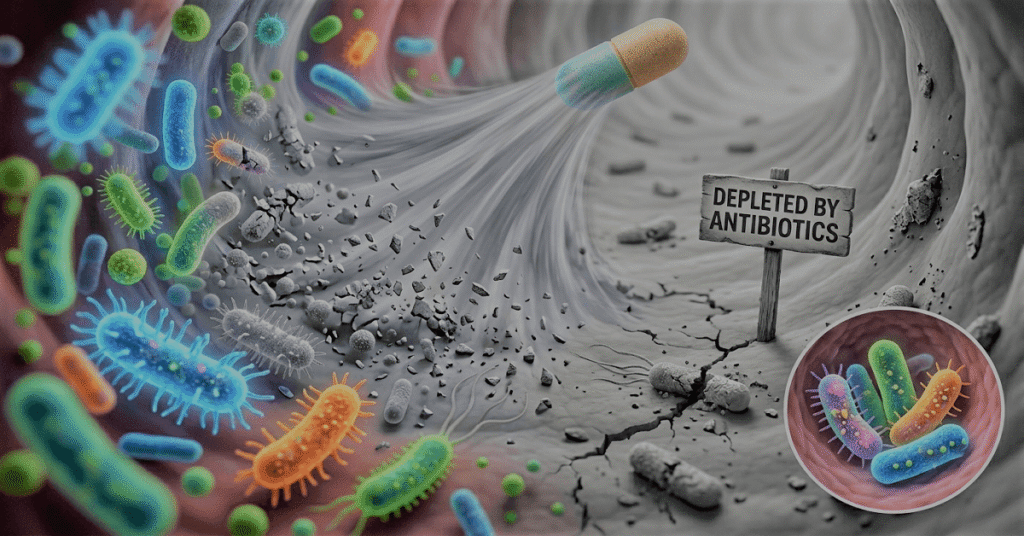
Antibiotics are designed to kill bacteria. That is the whole point and when you have a bacterial infection, that is exactly what you need.
The problem is that antibiotics are not precise. Most antibiotics are broad-spectrum, meaning they kill a wide range of bacteria not just the ones causing your infection.
Your gut is home to trillions of bacteria, most of which are helpful or neutral. A course of antibiotics does not distinguish between the harmful bacteria making you sick and the beneficial bacteria helping you digest food, support your immune system, and produce important compounds your body needs.
What typically happens:
- A significant drop in overall bacterial diversity – sometimes 30 percent or more of bacterial species can be affected
- Reduction in beneficial genera including Bifidobacterium and certain Lactobacillus species
- An opportunity for less beneficial or opportunistic organisms to expand, since their competition has been reduced
- Reduced production of short-chain fatty acids (the beneficial compounds your gut bacteria normally produce from fiber)
This is sometimes called antibiotic-associated dysbiosis, a disruption to the balance of your gut bacteria caused by antibiotic use.
How Long Does Recovery Actually Take?
This is the question most people want answered and the honest answer is: it depends, but probably longer than you would expect.
Short-term effects: bloating, loose stools, or changes in bowel habits can appear within days of starting antibiotics and often continue for one to two weeks after finishing the course.
Microbiome composition: research tracking gut bacteria after antibiotic courses has found that while many bacterial populations begin recovering within weeks, the overall composition of the microbiome can take up to 6 months to substantially return toward its pre-antibiotic state.
Some species may not fully return: certain studies have found that a small number of bacterial species can remain reduced or absent even up to a year after a single course of antibiotics, particularly with repeated or broad-spectrum courses.
One frequently cited study published in Nature Microbiology tracked the gut microbiomes of healthy adults after a short course of antibiotics and found that while most of the microbiome recovered within weeks to months, some bacterial taxa had not returned to baseline even after 180 days.
This does not mean you are stuck with a damaged gut forever. It means recovery is a process and the things you do during and after antibiotics genuinely matter for how complete and how fast that recovery is.
During Antibiotics: What to Do at the Time
If you are currently taking antibiotics (or know you will need to soon) these steps can help reduce the impact and support recovery from day one.
Take Probiotics - But Time Them Right
This is one of the most well-researched interventions for antibiotic-associated digestive issues, particularly antibiotic- associated diarrhea.
The two strains with the strongest evidence:- Saccharomyces boulardii – this is a beneficial yeast, not a bacteria, which means antibiotics do not kill it. It has solid research support for reducing antibiotic- associated diarrhea specifically.
- Lactobacillus rhamnosus GG – one of the most studied probiotic strains for reducing the risk and severity of antibiotic-associated digestive symptoms.
Keep Eating Fiber and Fermented Foods
It might seem counterintuitive – your gut is already disrupted, why add more food for bacteria that might be getting killed off?
But the bacteria that survive the antibiotic course still benefit from fiber. And fermented foods continuously introduce new live bacteria throughout the course, partially offsetting the losses. Plain yogurt, kefir, and other fermented foods are reasonable to continue during antibiotics just space them a couple hours from your dose, same as supplements. See: The Best Probiotic Foods to Eat Every DayFinish the Full Course (Unless Told Otherwise)
This is important from a broader health perspective. Stopping antibiotics early (even if you feel better) can contribute to antibiotic resistance and may not fully clear the infection, potentially requiring a second course later. A second course means a second hit to your gut microbiome.
Always follow your doctor’s guidance on the full course, even if symptoms improve before you finish.After Antibiotics: The Recovery Phase
This is where most of the rebuilding happens and where consistent habits make the biggest difference.
1. Continue Probiotics for 2 to 4 Weeks After
Research suggests continuing probiotic supplementation for several weeks after finishing antibiotics provides additional benefit for restoring balance.
A multi-strain probiotic containing Lactobacillus and Bifidobacterium species is a reasonable choice for this post-antibiotic window. Look for products with named strains and third-party testing.
2. Prioritize Fiber Diversity
This is, in my experience, the single most impactful thing during recovery and it is backed by solid research on how diet shapes the microbiome.
Different types of fiber feed different bacterial species. After antibiotics, your gut needs a wide variety of fiber sources to help rebuild a diverse bacterial community, not just one or two “superfoods.”Aim to include:
- Legumes (lentils, chickpeas, beans)
- Whole grains (oats, quinoa, brown rice, barley)
- A wide range of vegetables, not just the same two or three
- Fruits with skin where appropriate (apples, pears)
- Nuts and seeds
The variety matters more than any single food. Think in terms of “how many different plants did I eat this week” rather than focusing on one specific ingredient 🙂
3. Eat Fermented Foods Daily
This is where the rebuilding really happens. Fermented foods provide a steady stream of live bacteria to help repopulate the gut.
Rotate through different fermented foods (yogurt, kefir, sauerkraut, kimchi, miso) to introduce a wider range of bacterial strains than any single food provides.
4. Add Polyphenol-Rich Foods
Polyphenols are plant compounds found in foods like berries, dark chocolate, green tea, olive oil, and colorful vegetables. They are not digested directly by the body instead, gut bacteria ferment them, and this process appears to support the growth of beneficial species including Akkermansia and Bifidobacterium.
Adding polyphenol-rich foods during recovery is a small but evidence-supported addition to the rebuilding process.5. Be Patient and Consistent
I will be honest: this is the part most people struggle with. After two or three weeks of “doing everything right,” it is easy to feel like nothing has changed and give up.
But based on the research on recovery timelines, real microbiome rebuilding happens over months, not days. The habits that matter are the ones you can sustain, not a two-week intensive protocol followed by going back to how things were before. Think of it less like a “reset” and more like ongoing maintenance that happens to be especially important right now 🙂What About Fecal Microbiota Transplant (FMT)?
You may have come across FMT (fecal microbiota transplant) as a more dramatic intervention for restoring gut bacteria.
FMT involves transferring stool from a healthy donor into the gut of a recipient to help bring back a whole bunch of good, healthy bacteria.
Important context: FMT is currently approved by the FDA specifically for treating recurrent Clostridioides difficile (C. diff) infection which is a serious complication that can occur after antibiotic use, where harmful bacteria overgrow once competing bacteria have been depleted.
FMT is not an approved or recommended treatment for general post-antibiotic gut recovery, and it is not something to pursue outside of a medical setting for routine antibiotic aftercare.
If your doctor mentions C. diff as a possibility after antibiotic use (particularly if you experience severe, persistent diarrhea) that is a situation requiring prompt medical attention, not a do-it-yourself gut health approach.
When to See a Doctor
Most post-antibiotic digestive symptoms are temporary and improve with the steps above. However, see a doctor if you experience:
- Severe or persistent diarrhea, especially if it contains blood or mucus
- Diarrhea that develops during or shortly after antibiotic treatment and does not improve, or worsens
- Fever along with digestive symptoms
- Severe abdominal pain
- Signs of dehydration (dizziness, very dark urine, reduced urination)
These symptoms can indicate C. diff infection or other complications that require medical evaluation and specific treatment (not dietary changes alone).
Quick-Reference Summary
| Phase | What to Do |
|---|---|
| During antibiotics | Take Saccharomyces boulardii or L. rhamnosus GG, spaced 2 hours from antibiotic dose; finish the full course |
| First 2–4 weeks after | Continue a multi-strain probiotic; begin daily fermented foods |
| Ongoing (months) | Prioritize fiber diversity from legumes, whole grains, and varied vegetables; add polyphenol-rich foods |
| Timeline | Short-term symptoms often resolve in 1–2 weeks; full microbiome composition can take up to 6 months to substantially recover |
| Red flags | Severe/persistent diarrhea, blood or mucus in stool, fever – see a doctor promptly |
Frequently Asked Questions
Q: How long does it take for gut bacteria to recover after antibiotics?
A: Short-term digestive symptoms often improve within 1 to 2 weeks after finishing antibiotics. However, research shows that the overall composition of the gut microbiome can take up to 6 months to substantially return toward its pre-antibiotic state, and some bacterial species may remain reduced even longer (particularly after repeated or broad-spectrum antibiotic courses).
Q: Should I take probiotics during antibiotics or only after?
A: Both can help, but timing matters. During antibiotics, taking probiotics (particularly Saccharomyces boulardii or Lactobacillus rhamnosus GG) spaced at least 2 hours from your antibiotic dose has research support for reducing antibiotic-associated digestive symptoms. Continuing a probiotic for 2 to 4 weeks after finishing antibiotics provides additional support for restoring balance.
Q: What foods help restore gut bacteria after antibiotics?
A: The most helpful foods are a wide variety of fiber sources (legumes, whole grains, and diverse vegetables and fruits) combined with daily fermented foods like yogurt, kefir, sauerkraut, kimchi, and miso. Variety matters more than any single “superfood,” since different bacteria are fed by different types of fiber and different fermented foods introduce different bacterial strains.
Q: Is it normal to have digestive issues after antibiotics?
A: Yes, it is very common. Antibiotics disrupt the balance of gut bacteria, which can lead to bloating, bathroom changes, and an upset stomach for a week or two after you finish your prescription. This is usually temporary and improves with dietary support. However, severe or persistent diarrhea (especially with blood, mucus, or fever) is not normal and should be evaluated by a doctor.
Q: What is antibiotic-associated dysbiosis?
A: Antibiotic-associated dysbiosis refers to the disruption of gut bacteria balance caused by antibiotic use. Because most antibiotics are broad-spectrum, they reduce beneficial bacteria alongside the harmful bacteria causing an infection. This can result in reduced microbial diversity, lower production of beneficial compounds like short-chain fatty acids, and an opportunity for less beneficial organisms to expand.
Further Reading
For readers who want to go deeper into the research behind antibiotic effects on the gut microbiome:
Cell Host & Microbe – research on short- and long-term effects of antibiotic therapy on the human gut microbiome composition and resistome: https://www.cell.com/cell-host-microbe
National Library of Medicine (NIH/PubMed) – search “antibiotic gut microbiome recovery” for peer-reviewed studies on recovery timelines and interventions: https://pubmed.ncbi.nlm.nih.gov
Nature Microbiology – longitudinal studies tracking gut microbiome recovery following short-course antibiotic treatment in healthy adults: https://www.nature.com/nmicrobiol
Disclaimer: This post is for informational purposes only and is not medical advice. Always complete antibiotic courses as prescribed by your doctor, and consult a healthcare provider about probiotic use alongside any medication, especially if you are immunocompromised or critically ill.