
Hormones get their own category in most health conversations. Blood sugar issues, thyroid problems, PMS, low testosterone – these are usually treated as endocrine (hormone) problems, separate from gut health.
But the gut is deeply involved in how hormones are made, used, and cleared from the body.
This was something I had no idea about until I started exploring and reading more seriously about gut health. The connections were surprising and they explained a lot of things I had seen people struggle with for years without getting satisfying answers from conventional medicine.
This post is about those connections! What the gut does with your hormones. How gut dysfunction can throw them off. And what you can do to support both at the same time.
How the Gut Influences Hormones
Your gut influences hormones through three main pathways. Understanding these is the foundation of everything else in this post.
Pathway 1 - The Estrobolome
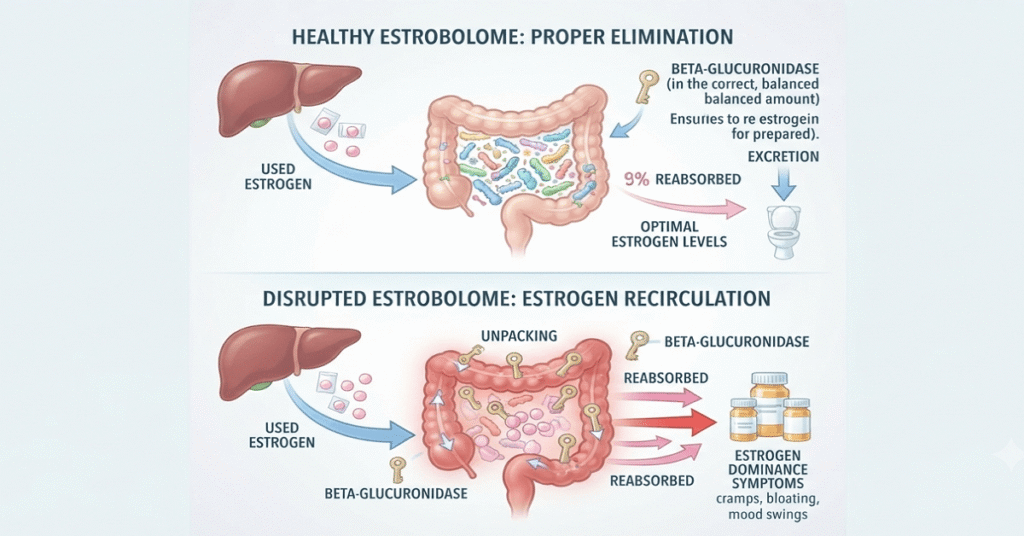
The estrobolome is a specific collection of gut bacteria that produce an enzyme called beta-glucuronidase. This enzyme plays a direct role in estrogen metabolism.
Here is how it works in simple terms:
The liver processes used estrogen and packages it for elimination from the body. It sends it to the gut for excretion. In a healthy gut, the estrobolome keeps beta-glucuronidase at the right level (allowing estrogen to be eliminated properly).
When the gut microbiome is disrupted:
- If beta-glucuronidase is too high – the enzyme “unpacks” estrogen in the gut and allows it to be reabsorbed into the bloodstream. Estrogen recirculates instead of being eliminated.
- If beta-glucuronidase is too low – too much estrogen gets eliminated, potentially leaving levels lower than optimal.
This means gut dysbiosis can push estrogen levels in either direction (too high or too low) depending on how the microbiome is disrupted.
Pathway 2 - The Gut-Adrenal Connection
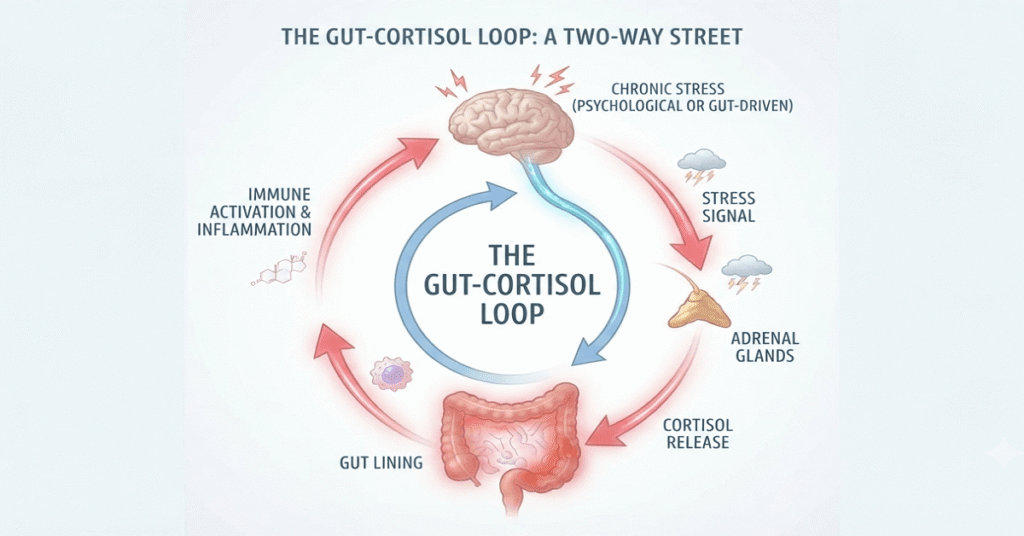
Your adrenal glands produce cortisol (your primary stress hormone). And the gut is directly connected to this system through the gut-brain axis.
When gut health is poor, it sends distress signals through the vagus nerve to the brain. The brain responds by activating the stress response (raising cortisol). Elevated cortisol then damages the gut lining further, disrupts the microbiome, and keeps the stress response elevated.
This is the gut-cortisol loop. It is one of the reasons chronic gut problems are so often accompanied by chronic stress and fatigue: the two systems are feeding each other.
Pathway 3 - Gut Bacteria and Hormone Production
Beyond estrogen and cortisol, gut bacteria are involved in producing or influencing several other hormones directly:
- Serotonin: 90 percent made in the gut; influences mood, appetite, and sleep
- Insulin: gut bacteria influence insulin sensitivity through inflammation and short-chain fatty acid production
- Thyroid hormones: the gut is involved in converting inactive T4 into active T3; gut inflammation can impair this conversion
- Leptin and ghrelin: hunger and satiety hormones directly influenced by microbiome composition
For Women: The Estrogen-Gut Connection
This section is particularly relevant for women, but men have estrogen too (just in smaller amounts) so it applies across the board.
When Estrogen Recirculates
When the estrobolome is disrupted and too much estrogen recirculates, the result can be a state called estrogen dominance – where estrogen is relatively high compared to progesterone.
Estrogen dominance is associated with:
- Painful, heavy, or irregular periods
- Severe PMS symptoms (mood swings, breast tenderness, bloating)
- Endometriosis – where estrogen-dependent tissue grows outside the uterus
- Uterine fibroids
- Difficulty losing weight, particularly around the hips and thighs
- Mood disturbances (anxiety and irritability in the week before a period)
Many women spend years managing these symptoms with hormonal medications without ever addressing the gut microbiome that may be driving the estrogen imbalance.
This is not to say gut health is the only cause of these conditions, it is rarely that simple. But it is frequently an overlooked contributing factor that deserves attention.
Perimenopause and the Gut
As women approach perimenopause, estrogen levels naturally decline. A diverse, healthy gut microbiome helps the body manage this transition more smoothly by maintaining better estrogen metabolism efficiency.
Women with less diverse gut microbiomes tend to experience more severe perimenopause symptoms (hot flashes, mood changes, sleep disruption) compared to those with healthier gut health. This is still an emerging area of research, but the direction of evidence is consistent.
For Men: Gut Health and Testosterone
Men produce estrogen too primarily through a process called aromatization, where testosterone is converted to estrogen. The same estrobolome dynamics apply.
When gut dysbiosis causes excess estrogen recirculation in men, the estrogen-testosterone ratio can shift with potential effects on:
- Energy and motivation
- Muscle mass and recovery
- Mood (low mood and irritability)
- Libido
- Body fat distribution particularly abdominal and chest fat
Additionally, chronic gut inflammation elevates cortisol which directly suppresses testosterone production. Men under chronic stress and with poor gut health often find their testosterone levels lower than expected for their age, partly because cortisol and testosterone exist in an inverse relationship.
Cortisol, Stress, and the Gut Loop
This affects everyone regardless of sex.
Cortisol is essential – it regulates blood sugar, manages inflammation, and drives the morning alertness that gets you out of bed. The problem is chronic elevation. When cortisol stays high for extended periods (due to chronic stress, poor sleep, or gut-driven immune activation) the downstream effects accumulate.
Chronic elevated cortisol:
- Promotes abdominal fat storage
- Suppresses the immune system over time
- Disrupts sleep quality
- Impairs thyroid hormone conversion
- Damages the gut lining (increasing intestinal permeability)
- Reduces testosterone and progesterone production
And the gut connection loops back here: gut dysbiosis activates immune responses that trigger cortisol release. Chronic gut inflammation keeps cortisol elevated even in the absence of psychological stress.
This is why stress management and gut health are not separate topics. They are the same loop addressed from different ends.
The Thyroid Connection
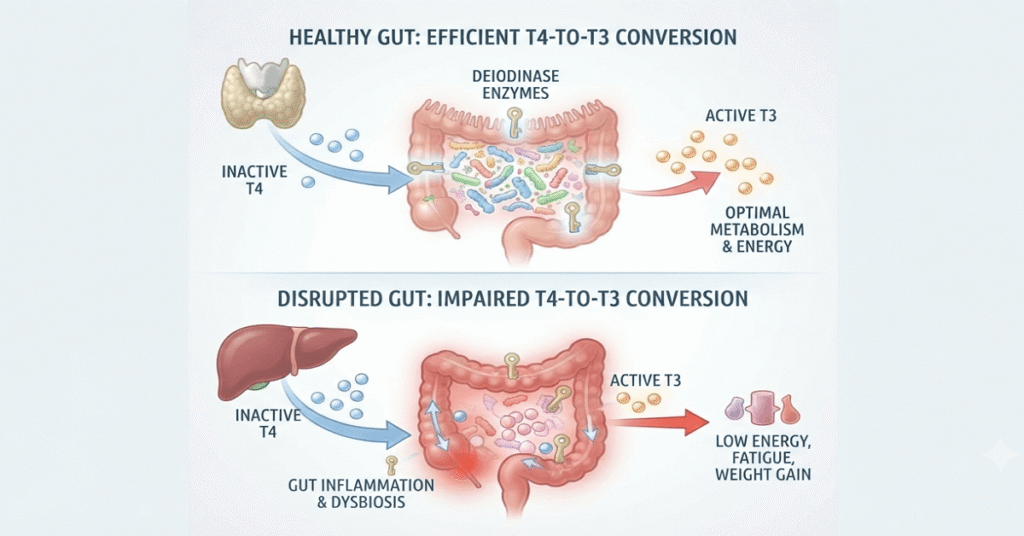
The thyroid gland produces hormones primarily T4 (thyroxine) that regulate metabolism, energy, body temperature, and much more. Most T4 is inactive when it leaves the thyroid. It needs to be converted to the active form T3 (triiodothyronine) to do its job.
About 20 percent of this T4-to-T3 conversion happens in the gut.
Gut inflammation and dysbiosis can impair this conversion meaning even someone with a thyroid that is producing adequate T4 may have functionally low thyroid hormone activity due to poor gut health.
This is not widely discussed in conventional thyroid management, but it is well-documented in the research. People with both gut problems and thyroid symptoms who address gut health sometimes see thyroid markers and energy improve together.
Additionally, autoimmune thyroid conditions (Hashimoto’s thyroiditis and Graves’ disease) are strongly associated with gut permeability and gut microbiome disruption. Leaky gut is thought to be a contributing factor in how these autoimmune conditions develop.
See: Common Gut Health Conditions – Symptoms, Causes, and Natural Relief
Insulin and Blood Sugar
Gut health has a direct relationship with insulin sensitivity how well your cells respond to insulin and manage blood sugar.
Several gut-related mechanisms influence this:
Short-chain fatty acids (SCFAs): produced when good bacteria ferment dietary fiber. Propionate specifically has been shown to improve insulin sensitivity and reduce liver fat production.
Gut inflammation: chronic gut inflammation promotes systemic inflammation that reduces insulin sensitivity driving blood sugar dysregulation and increasing type 2 diabetes risk.
The gut microbiome composition itself: people with type 2 diabetes consistently show different gut microbiome profiles than metabolically healthy individuals. Specific bacterial species appear to either protect against or contribute to insulin resistance.
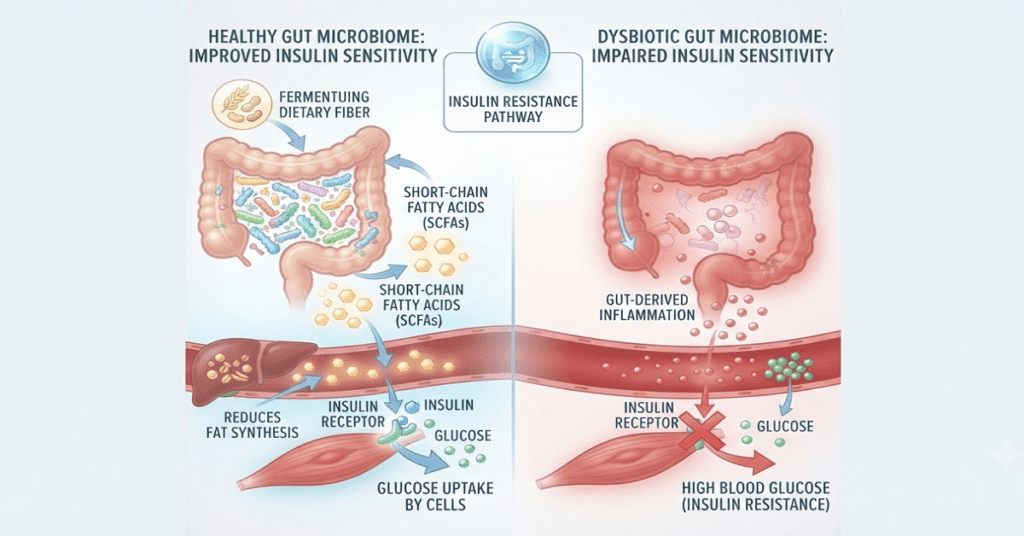
GLP-1 production: gut bacteria stimulate GLP-1, a hormone that improves insulin secretion and reduces blood sugar after meals. This is actually the same pathway targeted by popular GLP-1 receptor agonist medications though supporting GLP-1 through diet and gut health is a slower, more natural approach.
Practical Steps for Hormone-Gut Balance
The good news about all of this is that the healthy food choices and habits that help your gut also directly help balance your hormones.
Eat diverse fiber-rich plants. Fiber from a variety of vegetables, fruits, legumes, and whole grains feeds the estrobolome and supports healthy estrogen metabolism. Cruciferous vegetables (such as broccoli, cauliflower, Brussels sprouts) contain compounds (DIM and I3C) that specifically support estrogen clearance.
Add fermented foods. A healthy, diverse microbiome manages hormone metabolism more accurately. Yogurt, kefir, kimchi, and sauerkraut support that diversity.
Reduce ultra-processed food and alcohol. Both directly disrupt the gut microbiome and impair estrogen metabolism. Alcohol in particular increases beta-glucuronidase activity and promotes estrogen recirculation.
Support sleep consistently. Sleep is when cortisol drops and recovery hormones (including growth hormone and testosterone) peak. Chronic poor sleep disrupts this entire hormonal rhythm.
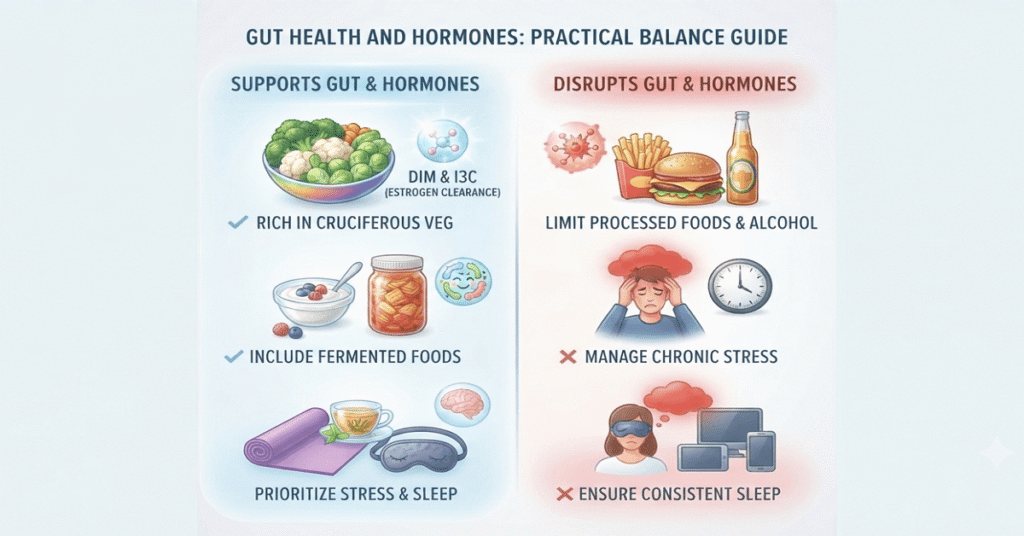
Manage chronic stress. Chronic stress keeps cortisol elevated, which disrupts every other hormone downstream. The gut-stress loop needs to be broken from both ends supporting the gut through diet and reducing the stress load through consistent management practices.
Consider magnesium. Magnesium is involved in over 300 enzymatic reactions in the body including many related to hormone production and regulation. It is directly relevant to both cortisol regulation and thyroid function.
Quick-Reference Summary
| Hormone | How Gut Health Affects It |
|---|---|
| Estrogen | The estrobolome regulates estrogen metabolism; dysbiosis can cause estrogen dominance or deficiency |
| Cortisol | Gut inflammation activates the stress response and elevates cortisol; chronic gut dysbiosis maintains elevated cortisol |
| Testosterone (men) | Estrogen recirculation from gut dysbiosis shifts the estrogen-testosterone ratio; cortisol from gut inflammation suppresses testosterone |
| Thyroid hormones | 20% of T4-to-T3 conversion happens in the gut; When gut gets inflamed, it makes this change much harder to happen! |
| Insulin | Gut bacteria influence insulin sensitivity through SCFAs, inflammation, and GLP-1 production |
| Leptin and ghrelin | Gut microbiome composition directly influences these hunger and satiety hormones |
Frequently Asked Questions
Q: Can gut health affect hormone balance?
A: Yes, the gut plays a significant role in hormone metabolism and regulation. The gut microbiome’s estrobolome regulates estrogen metabolism and clearance. Gut bacteria influence insulin sensitivity through short-chain fatty acid production and inflammation. About 20 percent of thyroid T4-to-T3 conversion occurs in the gut. And gut dysbiosis elevates cortisol through immune activation, which then disrupts multiple other hormones downstream.
Q: What is the estrobolome?
A: The estrobolome is a specific collection of gut bacteria that produce an enzyme called beta-glucuronidase. This enzyme regulates how estrogen is metabolized and eliminated from the body. A healthy estrobolome keeps just the right amount of that enzyme around so your body can clear out extra estrogen like it’s supposed to. When gut dysbiosis disrupts the estrobolome, estrogen can recirculate rather than being eliminated contributing to estrogen dominance.
Q: Can poor gut health cause estrogen dominance?
A: Gut dysbiosis can contribute to estrogen dominance by disrupting the estrobolome and increasing beta-glucuronidase activity. This causes processed estrogen in the gut to be reabsorbed into the bloodstream rather than eliminated. The result can be relatively elevated estrogen compared to progesterone associated with severe PMS, heavy periods, endometriosis, and difficulty managing weight. Addressing gut health is a meaningful but often overlooked component of managing estrogen balance.
Q: Does gut health affect testosterone in men?
A: Yes, in men, gut dysbiosis can affect testosterone through two main pathways. First, a disrupted estrobolome causes excess estrogen recirculation, shifting the estrogen-testosterone ratio unfavorably. Second, chronic gut inflammation elevates cortisol, which has a direct inverse relationship with testosterone (high cortisol suppresses testosterone production). Both pathways mean gut health is relevant to male hormone balance alongside diet, sleep, and exercise.
Q: Can gut health affect the thyroid?
A: Yes, approximately 20 percent of the conversion of inactive thyroid hormone T4 to active T3 takes place in the gut. Gut inflammation and dysbiosis can impair this conversion, leading to functional low thyroid activity even when the thyroid gland itself is producing adequate hormone. Additionally, autoimmune thyroid conditions like Hashimoto’s thyroiditis are strongly associated with gut permeability and microbiome disruption.
Disclaimer: This post is for informational purposes only and is not medical advice. If you have concerns about your hormone levels or thyroid function, please consult a qualified healthcare provider.