
The Gut Health Diet: What to Eat and What to Avoid
Disclaimer: This page is for informational purposes only and is not medical advice. If you have a diagnosed digestive condition, please consult your doctor or a registered dietitian before making significant dietary changes.
What You Will Learn in This Guide
- Why food is your most powerful gut health tool
- The best foods to eat for a healthy gut microbiome
- The foods most likely to harm your gut
- What probiotics and prebiotics actually are (and where to find them)
- How fiber works and why we are not getting enough
- A simple anti-inflammatory eating approach for gut healing
- A practical 7-day gut health meal plan you can start this week
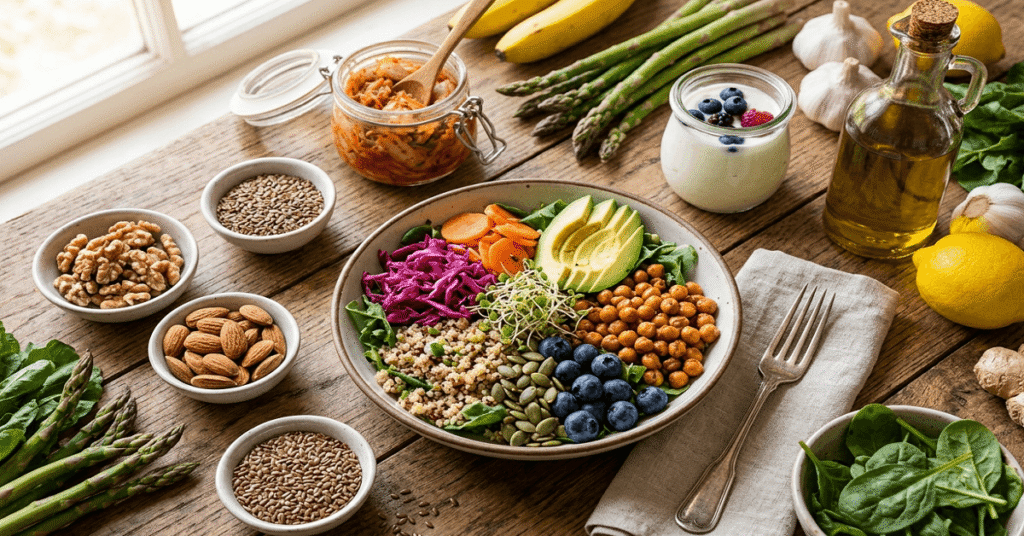
Food Is Your Most Powerful Gut Health Tool
There is no supplement, no protocol, and no fancy treatment that has more impact on your gut microbiome than what you eat every single day.
I know that sounds simple. But it took me a while to really believe it.
For a long time, I kept looking for the “thing” that would fix my gut. The right probiotic. The right supplement. The right test. And while those things have their place, none of them moved the needle the way changing my diet did.
The research backs this up clearly. What you eat shapes the composition of your gut microbiome within days. Good changes start showing up fast sometimes in as little as 72 hours after improving what is on your plate.
That is the good news. You have more control over your gut health than you might think. And it starts at your next meal.
How Food Shapes Your Gut Microbiome
Your gut is home to trillions of bacteria. Different types of bacteria eat different types of food. What you eat determines which bacteria thrive and which ones struggle.
Think of it like this:
Eat a lot of fiber-rich vegetables and whole foods? Your good bacteria get fed. They multiply. They produce compounds that reduce inflammation and protect your gut lining.
Eat a lot of processed food, sugar, and refined grains? Harmful bacteria get fed instead. They crowd out the good ones. Inflammation goes up. The gut lining gets damaged over time.
Every meal you eat is, in a very real sense, casting a vote for the kind of gut microbiome you have.
That does not mean you need to eat perfectly. It means that the overall pattern of what you eat matters a great deal and small, consistent improvements make a real difference.
The Best Foods for Gut Health
1. Fiber-Rich Vegetables and Fruits
Dietary fiber is the single most important nutrient for gut health. It is the primary food source for your good gut bacteria. Without it, those bacteria literally starve.
The average American eats around 15 grams of fiber per day. The recommended amount is 25–38 grams. Most of us are getting less than half of what our gut needs.
The solution is not complicated. Eat more plants.
Best vegetables for gut health:
- Broccoli, cauliflower, and Brussels sprouts
- Leafy greens (spinach, kale, arugula)
- Asparagus
- Garlic and onions (more on these below they are especially powerful)
- Carrots, beets, sweet potatoes
- Artichokes
Best fruits for gut health:
- Apples (especially with the skin, the pectin feeds good bacteria)
- Bananas – slightly unripe ones contain resistant starch, which is excellent prebiotic fiber
- Berries – blueberries, raspberries, blackberries
- Pears
- Kiwi – research shows kiwi specifically improves bowel regularity and reduces bloating
A simple rule: Aim for at least 5 different vegetables or fruits per day. Variety matters as much as quantity. Different plants feed different strains of gut bacteria. A diverse diet = a diverse microbiome.
2. Prebiotic Foods
You have probably heard of probiotics. But prebiotics are just as important maybe more so.
Probiotics are live bacteria found in fermented foods and supplements.
Prebiotics are the food those bacteria eat. They are special types of fiber that humans cannot digest but gut bacteria can.
When you eat prebiotic foods, you are essentially fertilizing your gut garden.
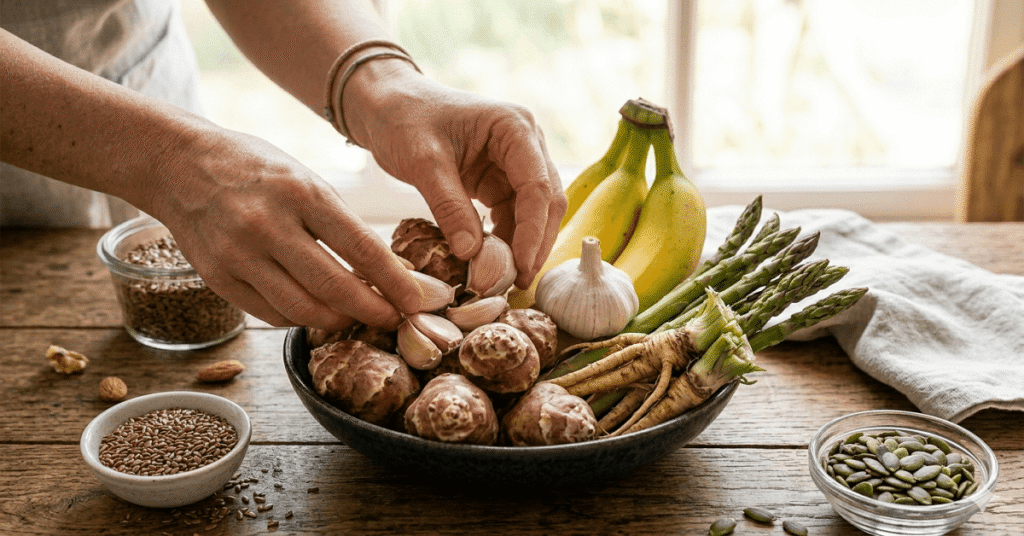
Best prebiotic foods:
| Food | Notes |
|---|---|
| Garlic | One of the most potent prebiotic foods. Raw is more powerful than cooked. |
| Onions | Strong prebiotic. Also contains quercetin, an anti-inflammatory compound. |
| Leeks | Similar to onions; good for gut bacteria diversity. |
| Asparagus | Excellent source of inulin, a prebiotic fiber. |
| Bananas (slightly unripe) | Resistant starch acts as a powerful prebiotic. |
| Oats | Contain beta-glucan, a well-studied prebiotic fiber. |
| Apples | Pectin in apple skin is a prebiotic. |
| Dandelion greens | One of the richest prebiotic sources available. Find them at health food stores or farmers markets. |
| Jerusalem artichokes | Very high in inulin. Start with small amounts (they can cause gas if you are not used to them). |
| Legumes | Lentils, chickpeas, black beans (excellent prebiotic and fiber sources). |
A note on going slowly: If you are not used to eating many prebiotic foods, introduce them gradually. Adding too much too fast can cause gas and bloating as your gut bacteria adjust. This is temporary and normal not a sign something is wrong.
3. Fermented Foods (Natural Probiotics)
Fermented foods contain live bacteria that contribute directly to your gut microbiome. They are the most natural way to get probiotics and research consistently shows that food-based probiotics are highly effective.
I added one small serving of fermented food to my diet every day, and within a few weeks I noticed my digestion felt steadier. Less unpredictable. That is not unusual; it is one of the most consistent changes people report.
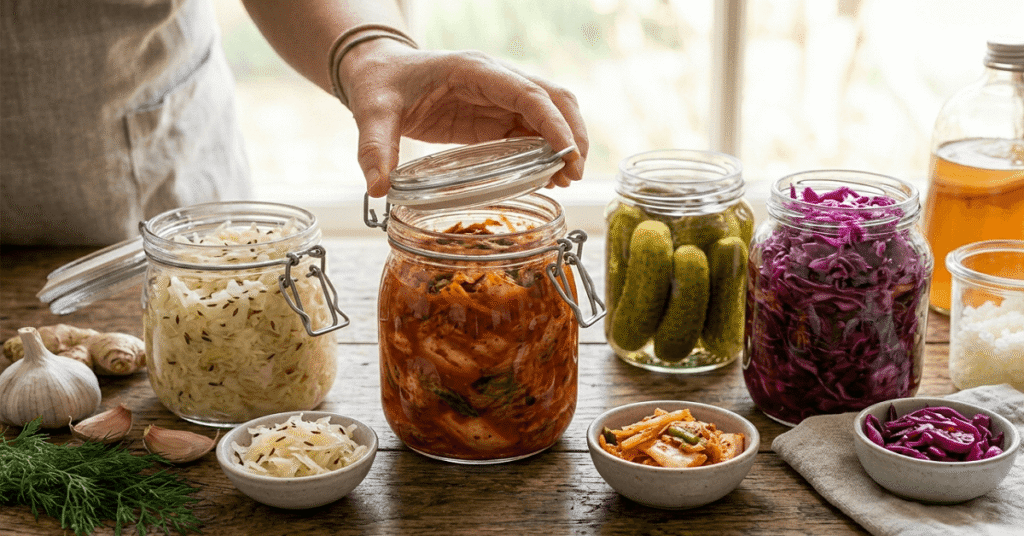
Best fermented foods for gut health:
Plain yogurt – Look for labels that say “live and active cultures.” Avoid yogurts with lots of added sugar (the sugar feeds harmful bacteria and largely cancels the benefit). Full-fat plain yogurt or Greek yogurt are the best options.
Kefir – A drinkable fermented dairy product that contains even more bacterial strains than yogurt. Slightly tangy. Very effective. Available at most US grocery stores.
Sauerkraut – Fermented cabbage. Buy the refrigerated kind, not the shelf-stable canned version. The canning process kills the live bacteria. Check the label, it should say “raw” or “unpasteurized.”
Kimchi – A Korean fermented vegetable dish, usually made with cabbage and spices. Available in most grocery stores in the US now. Excellent diversity of beneficial bacteria strains.
Kombucha – Fermented tea. Choose low-sugar varieties. Some kombucha brands add a lot of sugar after fermentation, which reduces the gut health benefit. Look for less than 5 grams of sugar per serving.
Miso – A fermented soybean paste used in Japanese cooking. Add it to soups and dressings. Do not boil miso after adding it (high heat kills the live cultures. Stir it in at the end).
Tempeh – Fermented soybeans pressed into a firm cake. Higher in protein than tofu. Nutty flavor. Good for gut health and as a plant-based protein source.
4. Whole Grains
Unlike refined grains (white bread, white rice, white pasta), whole grains contain the fiber and nutrients that good gut bacteria need.
Best whole grains for gut health:
- Oats: especially steel-cut or rolled oats (not instant)
- Quinoa
- Brown rice
- Barley: one of the highest sources of beta-glucan fiber
- Whole wheat (if you tolerate gluten well)
- Rye bread: fermented rye bread (like sourdough rye) is especially good for gut health
Simple swap: Replace white rice with brown rice or quinoa a few times a week. It is a small change that adds meaningful fiber to your diet.
5. Legumes
Lentils, chickpeas, black beans, kidney beans, and other legumes are some of the most gut-friendly foods available.
They are high in both prebiotic fiber and resistant starch – two types of fiber that gut bacteria absolutely love.
In populations that eat the most legumes, researchers consistently find the most diverse gut microbiomes. That is not a coincidence.
Simple ways to add legumes:
- Add canned chickpeas to salads
- Use black beans in rice dishes
- Make lentil soup (lentils cook fast and do not need soaking)
- Add white beans to pasta dishes
If legumes cause you gas right now, that is a sign your gut bacteria are adjusting. Start with small amounts and build up gradually. The gas usually reduces within 2–3 weeks as your gut adapts.
6. Nuts and Seeds
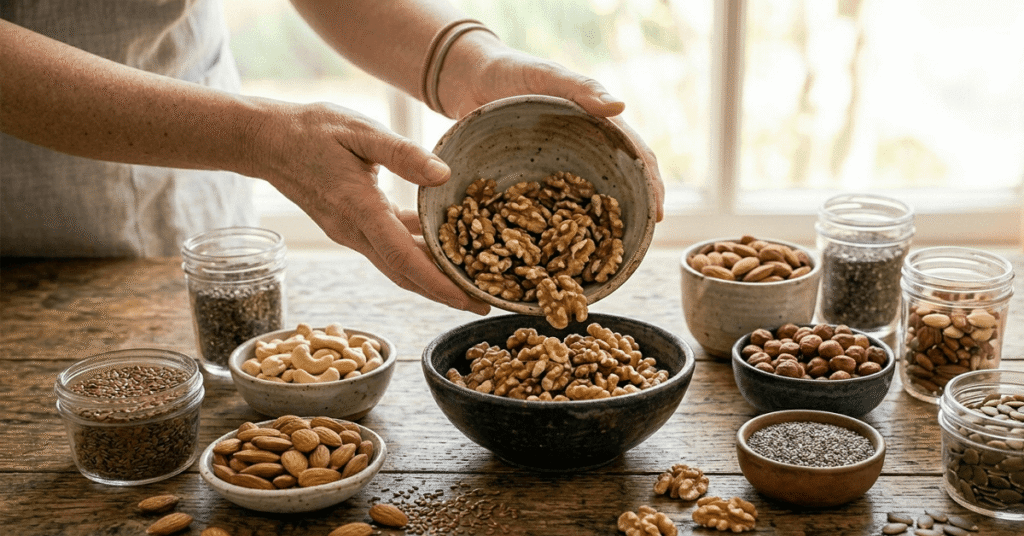
Nuts and seeds contain fiber, healthy fats, and polyphenols (plant compounds that act as food for beneficial gut bacteria).
Best options:
- Walnuts – one of the most researched nuts for gut health benefit
- Almonds – high in fiber and prebiotic properties
- Flaxseeds – rich in both fiber and omega-3 fats; grind them before eating for maximum benefit
- Chia seeds – absorb water and form a gel that helps regulate bowel movements
- Hemp seeds – good fiber and protein source
A small handful of mixed nuts as a snack is one of the easiest gut-friendly swaps you can make.
7. Bone Broth
Bone broth is made by simmering animal bones (usually chicken or beef) for many hours. The long cooking process releases collagen, gelatin, and amino acids (especially glutamine).
Glutamine is one of the most important nutrients for the gut lining. It helps maintain and repair the cells that line your intestine – the cells that form the barrier between your gut and your bloodstream.
While the research on bone broth specifically is still developing, the components it contains (particularly glutamine) have solid evidence for supporting gut lining health.
Bone broth is easy to find at most US grocery stores (look for brands like Kettle & Fire or Epic). You can also make it at home cheaply with leftover chicken carcasses.
8. Healthy Fats
Not all fats are equal when it comes to gut health. Some fats support the gut. Others damage it.
Gut-supportive fats:
- Olive oil: especially extra-virgin. Polyphenols in olive oil feed beneficial gut bacteria and have anti-inflammatory effects. Widely studied and consistently positive.
- Avocado: high in fiber and monounsaturated fats. Studies show avocado consumption positively changes gut microbiome composition.
- Fatty fish: salmon, sardines, mackerel. Omega-3 fats reduce gut inflammation and support gut lining integrity.
These fats are your gut’s friends 🙂 Use them regularly.
The Foods That Hurt Your Gut
Now for the other side. These are the foods most consistently linked to gut microbiome damage and digestive inflammation.
This is not about never eating these things again. It is about understanding what they do and reducing them where you reasonably can.
1. Ultra-Processed Foods
This is the biggest one. By far.
Ultra-processed foods include:
- Packaged snack foods (chips, crackers, cookies)
- Fast food and most restaurant convenience food
- Frozen meals and processed meats
- Most breakfast cereals
- Packaged bread with long ingredient lists
- Sodas and sugary drinks
These foods are engineered to taste good. But they are full of ingredients that damage the gut:
Emulsifiers like carrageenan, polysorbate 80, and carboxymethylcellulose are added to extend shelf life and improve texture. Research has found that these chemicals disrupt the gut microbiome and increase gut permeability even at the low doses found in normal food consumption.
Refined carbohydrates break down quickly to sugar, feeding harmful bacteria and causing blood sugar spikes that promote inflammation.
Artificial flavors and preservatives alter gut bacteria composition in ways that are not yet fully understood but the early research is not encouraging.
If your diet is currently heavy in ultra-processed food, this is the single most impactful place to start making changes. You do not need to cut it all out at once. But each substitution you make for a whole-food alternative matters.

2. Refined Sugar
Sugar is the preferred fuel of harmful gut bacteria. When you eat a lot of it, you are essentially farming the bacteria that cause problems (bloating, inflammation, gut dysbiosis).
The average American consumes around 17 teaspoons of added sugar per day. The recommended maximum is 6–9 teaspoons.
This does not mean avoiding all sugar. Naturally occurring sugar in whole fruit is fine; the fiber in fruit slows down the sugar absorption and provides prebiotic benefit at the same time.
The problem is added sugar – the kind in sodas, packaged snacks, flavored yogurts, sauces, dressings, and most processed food.
Check ingredient labels. Sugar hides under many names: high fructose corn syrup, cane sugar, dextrose, maltose, agave nectar, and more. If sugar is in the first three ingredients put it back on the shelf.
3. Artificial Sweeteners
This one surprises a lot of people. You cut out sugar and switch to diet drinks, surely that is better for your gut?
Unfortunately, research suggests otherwise.
Studies on saccharin, sucralose, and aspartame have found that these artificial sweeteners alter gut bacteria composition in ways that can actually increase blood sugar dysregulation and gut microbiome imbalance.
If you need sweetness, small amounts of honey or maple syrup are better options for gut health than artificial sweeteners. But less sweet overall is the real goal.
4. Industrial Seed Oils
Vegetable and seed oils (soybean oil, corn oil, canola oil, sunflower oil) are extremely high in omega-6 fatty acids.
In small amounts, omega-6 fats are fine. But the modern American diet contains far too many of them. Most processed and restaurant food is cooked in these oils.
High omega-6 consumption promotes gut inflammation and can contribute to gut microbiome imbalance. It also disrupts the omega-3 to omega-6 ratio your body needs for healthy inflammation control.
Swap these for: Extra-virgin olive oil for cooking at low to medium heat. Avocado oil for higher-heat cooking. Both are far better for your gut.
5. Alcohol
Alcohol disrupts gut health in several ways:
- It damages the gut lining directly, increasing intestinal permeability
- It alters the composition of gut bacteria, reducing beneficial species
- It promotes growth of harmful bacteria including certain types linked to liver inflammation
- It increases systemic inflammation throughout the body
Occasional moderate drinking is unlikely to cause lasting damage for most people. But regular drinking (especially daily or heavy drinking) is a significant gut health risk.
If you drink regularly and have persistent gut symptoms, reducing alcohol consumption is worth trying before anything else.
6. Gluten (For Some People)
This one needs nuance.
Gluten (the protein found in wheat, barley, and rye) causes serious intestinal damage in people with celiac disease. For them, avoiding gluten entirely is not optional. It is medical necessity.
For people with non-celiac gluten sensitivity, gluten can cause digestive symptoms and discomfort even without causing the intestinal damage seen in celiac disease.
For people without either condition the evidence is less clear. Some research suggests that modern highly processed wheat products (most commercial bread and pasta) can cause low-grade gut inflammation even in people without diagnosed sensitivity. Other research suggests whole grain wheat is beneficial for the microbiome.
Practical approach: If you regularly feel bloated, foggy, or unwell after eating wheat-based foods it is worth experimenting with reducing them and seeing how you feel. If you feel fine eating wheat there is no compelling reason to cut it out.
See: Is Gluten Bad for Gut Health Even If You Are Not Celiac?
Probiotics vs Prebiotics - What Is the Difference?
People often confuse these two terms. Here is a simple way to remember the difference:
| Probiotics | Prebiotics | |
|---|---|---|
| What they are | Live bacteria | Food for bacteria |
| Found in | Fermented foods, supplements | Fiber-rich plants |
| What they do | Add beneficial bacteria to your gut | Feed and grow the bacteria already there |
| Best sources | Yogurt, kefir, kimchi, sauerkraut | Garlic, onions, oats, bananas, legumes |
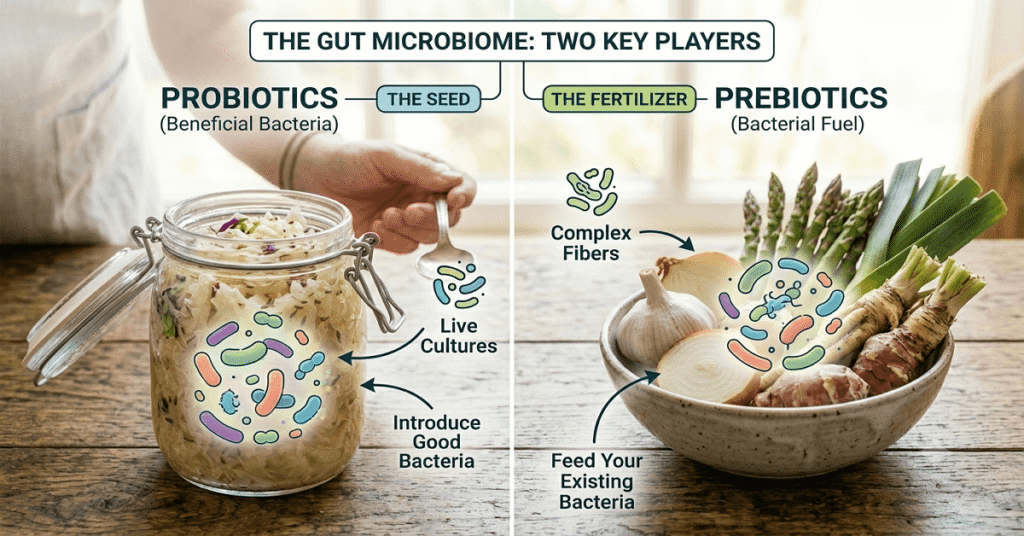
Both matter. But most research suggests that prebiotics (feeding and growing the bacteria you already have) may have a more lasting impact than probiotics alone.
Think of it this way: adding probiotics without feeding them is like planting seeds in dry soil. The prebiotics are the water and fertilizer that make the seeds grow.
The Role of Fiber: Soluble vs Insoluble
Not all fiber works the same way. There are two main types, and both are important for gut health.
Soluble fiber dissolves in water and forms a gel. It feeds gut bacteria (acting as a prebiotic), helps regulate blood sugar, and lowers cholesterol.
Best sources: Oats, apples, pears, legumes, flaxseeds, barley, psyllium husk.
Insoluble fiber does not dissolve. It adds bulk to stool and helps food move through the digestive system at a healthy pace. Think of it as the broom that keeps things moving.
Best sources: Whole wheat, brown rice, nuts, seeds, most vegetables, wheat bran.
The goal is to eat both. A diet rich in a variety of plants naturally gives you both types without needing to think about it.
Anti-Inflammatory Eating for Gut Healing
Chronic gut inflammation is at the root of most persistent digestive problems. The good news is that food is one of the most powerful tools for reducing gut inflammation.
Anti-inflammatory eating principles for gut health:
1. Eat the rainbow. Different colored vegetables and fruits contain different phytonutrients (plant compounds that reduce inflammation and feed diverse gut bacteria). Aim for at least 3–4 different colors on your plate each day.
2. Use olive oil as your main cooking fat. The polyphenols in extra-virgin olive oil are among the most well-studied anti-inflammatory compounds in any food.
3. Eat fatty fish 2–3 times per week. Salmon, sardines, mackerel, and anchovies are high in omega-3 fats that directly reduce gut inflammation. Canned sardines and salmon are affordable options.
4. Add turmeric and ginger regularly. Both are well-supported by research for reducing gut inflammation. Add turmeric to eggs, soups, and grain dishes. Use fresh ginger in teas, stir-fries, and dressings.
5. Reduce sugar and refined carbs. These are among the most consistent drivers of gut inflammation. Reducing them has a rapid, measurable impact.
US Grocery Store Guide - Where to Find These Foods
One thing I noticed when I started eating for gut health was that most guides assumed you had access to specialty health food stores. Not everyone does. And even if you do, specialty stores are expensive.
Here is a practical guide to finding gut-healthy foods at regular US grocery stores like Kroger, Walmart, Target, Publix, or Safeway.
| Food | Where to Find It | What to Look For |
|---|---|---|
| Plain yogurt with live cultures | Dairy aisle | “Live and active cultures” on label. Fage, Chobani, Stonyfield are reliable brands. |
| Kefir | Dairy aisle near yogurt | Lifeway is the most widely available US brand. Plain, low-sugar. |
| Sauerkraut (live cultures) | Refrigerated section near pickles/deli | Must say “raw” or “unpasteurized.” Bubbies is a widely available brand. |
| Kimchi | International aisle or refrigerated section | Trader Joe’s, Whole Foods, and most large grocery chains now carry it. |
| Kombucha | Natural foods or beverage aisle | GT’s Synergy is the most widely available. Check sugar content, aim for under 5g per serving. |
| Miso | International aisle or refrigerated natural foods | White (shiro) miso is mildest. Refrigerate after opening. |
| Flaxseeds | Health food or baking aisle | Buy whole, store in fridge, grind as needed. Or buy pre-ground (store in freezer). |
| Lentils | Canned or dried goods aisle | Canned are just as nutritious and much faster. |
| Bone broth | Soup aisle or refrigerated section | Look for “grass-fed” or “pasture-raised.” Kettle & Fire is widely available. |
| Extra-virgin olive oil | Cooking oils aisle | Look for a harvest date on the bottle. California Olive Ranch is a reliable US brand. |
7-Day Gut Health Meal Plan
This is a simple, realistic meal plan designed for busy people. It is not about perfection. It is about showing you what a gut-friendly week can actually look like.
Every day includes:
- At least one fermented food
- At least one prebiotic food
- A variety of fiber sources
- Healthy fats
- Minimal processed food
You do not need to follow it exactly. Use it as inspiration and adjust it to your preferences 🙂
Day 1: Monday
| Meal | What to Eat |
|---|---|
| Breakfast | Overnight oats with banana slices, blueberries, and a tablespoon of flaxseed. Top with plain yogurt. |
| Lunch | Large salad with mixed greens, chickpeas, cucumber, cherry tomatoes, avocado, and olive oil + lemon dressing. |
| Dinner | Baked salmon with roasted broccoli and brown rice. |
| Snack | A small handful of walnuts and an apple. |
Day 2: Tuesday
| Meal | What to Eat |
|---|---|
| Breakfast | 2 scrambled eggs with sautéed spinach and garlic. Slice of sourdough bread. |
| Lunch | Lentil soup with a side of whole grain bread. |
| Dinner | Chicken stir-fry with broccoli, bell peppers, onion, and brown rice. Use olive oil. |
| Snack | Plain kefir (6–8 oz) with a pear. |
Day 3: Wednesday
| Meal | What to Eat |
|---|---|
| Breakfast | Smoothie: kefir, banana, berries, chia seeds, and a handful of spinach. |
| Lunch | Whole grain wrap with hummus, roasted vegetables, and leafy greens. |
| Dinner | Bean and vegetable chili with brown rice or cornbread. |
| Snack | Carrot sticks with 2 tablespoons of almond butter. |
Day 4: Thursday
| Meal | What to Eat |
|---|---|
| Breakfast | Steel-cut oatmeal with raspberries, a drizzle of honey, and chopped walnuts. |
| Lunch | Grain bowl: quinoa, roasted sweet potato, black beans, avocado, salsa. |
| Dinner | Sardines on whole grain toast with sliced cucumber and a side salad. |
| Snack | A small bowl of plain yogurt with a handful of mixed berries. |
Day 5: Friday
| Meal | What to Eat |
|---|---|
| Breakfast | Whole grain toast with mashed avocado and 2 poached eggs. |
| Lunch | Leftover bean chili or lentil soup. Side of sauerkraut (2–3 tablespoons). |
| Dinner | Baked chicken thighs with roasted asparagus and a side of miso soup. |
| Snack | Kombucha (low-sugar) and a handful of almonds. |
Day 6: Saturday
| Meal | What to Eat |
|---|---|
| Breakfast | Yogurt parfait: plain Greek yogurt, granola (low-sugar), kiwi slices, and blueberries. |
| Lunch | Large veggie-loaded omelet with onions, mushrooms, spinach, and a side of kimchi. |
| Dinner | Salmon tacos with shredded cabbage, avocado, salsa, and lime. Corn tortillas. |
| Snack | Apple slices with a tablespoon of almond or peanut butter. |
Day 7: Sunday
| Meal | What to Eat |
|---|---|
| Breakfast | Banana oat pancakes (2 eggs + 1 banana + half cup oats; blend and cook). Top with berries. |
| Lunch | Big salad: romaine, shredded carrots, beets, walnuts, chickpeas, olive oil dressing. |
| Dinner | Slow-cooked lentil and vegetable stew. Serve with whole grain bread. |
| Snack | A glass of kefir or a small bowl of yogurt |
Notes on the meal plan:
- All meals can be adjusted for dietary preferences. Swap salmon for tofu, chicken for tempeh, yogurt for coconut yogurt [the principles stay the same].
- Cook in bulk on weekends. Grains, legumes, and roasted vegetables all keep well for 4–5 days in the fridge.
- Do not stress about perfection. Even following this loosely 70–80% of the time produces meaningful results.
Common Diet Mistakes That Unknowingly Harm the Gut
Even people trying to eat healthy sometimes make these mistakes. I made most of them myself.
Eating too little variety. Eating the same 10 foods every week (even if they are healthy foods) limits gut microbiome diversity. Different bacteria eat different things. Rotating your vegetables, fruits, and grains gives a wider range of bacteria something to thrive on.
Cutting carbs too aggressively. Low-carb diets can reduce fiber intake significantly. Many of the best prebiotic foods (legumes, oats, bananas) are moderate in carbohydrates. Cutting carbs without accounting for fiber often damages the gut microbiome over time.
Relying on supplements instead of food. Probiotic supplements are useful in specific situations. But they cannot replicate the variety and synergy of bacteria found in fermented foods, and they cannot replace the prebiotic fiber your gut needs from plants.
Eating “healthy” processed food. Protein bars, meal replacement shakes, healthy snack packs: many of these still contain emulsifiers, artificial sweeteners, and refined ingredients that harm the gut. Read labels even on products marketed as health foods.
Not drinking enough water. Fiber needs water to work properly. Without adequate hydration, adding fiber can actually worsen constipation. Aim for at least 8 glasses of water per day, more if you are increasing your fiber intake.
Quick-Reference Summary
| Food Type | Eat More | Eat Less |
|---|---|---|
| Vegetables | All types: especially garlic, onions, asparagus, leafy greens | Processed, fried vegetables |
| Fruits | Apples, berries, bananas, kiwi, pears | Fruit juice (lacks fiber) |
| Grains | Oats, quinoa, brown rice, barley, sourdough | White bread, white rice, white pasta |
| Proteins | Fatty fish, legumes, eggs, fermented soy (tempeh, miso) | Processed meats, fast food |
| Dairy | Plain yogurt, kefir | Flavored yogurts, ice cream, most cheese in excess |
| Fats | Olive oil, avocado, walnuts, fatty fish | Seed oils (soybean, corn, sunflower), trans fats |
| Fermented | Yogurt, kefir, kimchi, sauerkraut, miso, tempeh, kombucha | Pasteurized versions of these foods |
| Sweeteners | Honey and maple syrup in small amounts | Added sugar, artificial sweeteners |
Frequently Asked Questions
Q: What is the best diet for gut health?
A: There is no single “best” gut health diet. But the eating patterns most consistently linked to good gut microbiome health share common features: high in fiber from diverse plants, includes fermented foods, low in ultra-processed food and added sugar, and uses anti-inflammatory fats like olive oil. The Mediterranean diet most closely fits this description and has the strongest research behind it for gut health.
Q: How quickly can diet change gut health?
A: Research shows that the gut microbiome begins to respond to dietary changes within 24–72 hours. Meaningful, measurable improvements in microbiome diversity typically develop over 2–4 weeks of consistent dietary change. Some people notice improvements in digestion, energy, and bloating within just a few days of reducing processed food and increasing fiber and fermented foods.
Q: Should I take a probiotic supplement or just eat fermented foods?
A: For most people, starting with food-based probiotics (yogurt, kefir, kimchi, sauerkraut) is the right first step. Food-based probiotics come packaged with nutrients, fiber, and other beneficial compounds that supplements do not provide. Supplements become more useful in specific situations, such as rebuilding after antibiotics or addressing a diagnosed condition.
See: Best Gut Health Supplements – What Works and What Doesn’t
Q: Is the Mediterranean diet good for gut health?
A: Yes, it is one of the most well-studied diets for gut microbiome health. The Mediterranean diet is high in vegetables, fruits, legumes, whole grains, olive oil, and fish: all of which strongly support gut bacteria diversity. It is also low in processed food and red meat, which benefit gut health. It is a sensible model for anyone looking to improve their diet for gut health without a complicated protocol.
Q: Do I need to eat organic food for gut health?
A: Organic food is helpful but not essential. The most important thing is eating more whole, unprocessed plants – organic or not. Conventional produce still provides the fiber and phytonutrients your gut needs. If budget is a concern, the “Dirty Dozen” list from the Environmental Working Group (EWG) identifies the 12 conventional produce items with the highest pesticide loads worth buying organic when possible. Everything else on the “Clean Fifteen” list is fine to buy conventional.
What to Read Next
New to gut health? Start with the basics: Gut Health 101 – The Complete Beginner’s Guide
Dealing with bloating, IBS, or another specific problem? Gut Health Conditions – Symptoms, Causes, and Natural Relief
Want to understand which supplements are worth it? Best Gut Health Supplements – What Works, What Doesn’t
Explore specific recipes and food guides: Gut-Healing Diet and Food
Get a free 7-day gut reset plan: Start Here