
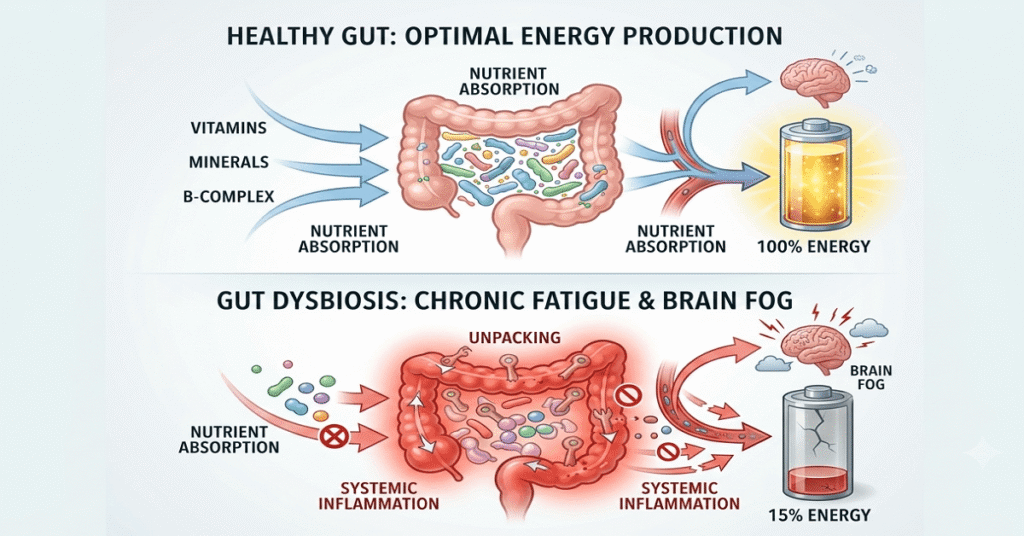
There is a specific kind of tired that is different from just not getting enough sleep.
It is the kind where you wake up after eight hours and feel like you barely rested. Where you drag yourself through the morning. Where a full night of sleep does not seem to move the needle at all.
I went through a period like this. Long enough that I started assuming it was just my life now that this was what being a busy adult in my mid-thirties felt like. I drank more coffee. I pushed through. I told myself it was stress.
What I did not know then was that what I was eating (and what was happening in my gut) was a major part of what was making me so tired.
If persistent fatigue is something you have been living with, this post is worth reading. Not because gut health is the answer for everyone. But because it is an overlooked piece of the puzzle that is worth examining before you resign yourself to feeling this way indefinitely.
First: Rule Out the Obvious
Fatigue has many causes. Before connecting the dots to gut health, it is worth confirming whether other common causes have been evaluated:
- Iron deficiency anemia – one of the most common causes of fatigue, particularly in women
- Hypothyroidism – underactive thyroid slows metabolism and causes persistent tiredness
- Vitamin D deficiency – extremely common in the US, particularly in winter months
- Poor sleep quality – sleep apnea, restless legs, or fragmented sleep can leave you exhausted despite time in bed
- Chronic stress or depression – both are significant drivers of fatigue
- Sedentary lifestyle – counterintuitively, moving less often makes you feel more tired
If you have not had a basic blood panel checked recently (iron, ferritin, B12, vitamin D, thyroid) that is a worthwhile first step.
What makes gut-related fatigue particularly tricky is that it often accompanies and amplifies these other factors. Low B12 from poor gut absorption. Low iron because inflammation impairs uptake. Disrupted thyroid conversion because of gut inflammation.
The gut is not always the root cause of fatigue. But it is frequently involved and often overlooked.
How the Gut Creates Fatigue
There are several distinct mechanisms through which poor gut health drains your energy. Understanding them helps explain why this is more than just a digestion issue.
1. Nutrient Malabsorption
Your gut lining is where nutrients cross from your food into your bloodstream. When the gut lining is damaged or inflamed (as in leaky gut or chronic gut dysbiosis) this process becomes less efficient.
The nutrients most directly tied to energy and most commonly affected by poor gut absorption include:
Iron – essential for making hemoglobin, which carries oxygen to your cells. Without adequate iron, cells cannot produce energy efficiently. Fatigue is the primary symptom of iron deficiency. Gut inflammation impairs iron absorption directly, and some gut conditions cause low-level blood loss that further depletes stores.
Vitamin B12 – required for energy metabolism and the health of nerve cells and red blood cells. B12 absorption depends on a healthy gut lining and a protein called intrinsic factor produced in the stomach. Gut inflammation, low stomach acid, and dysbiosis all impair B12 absorption. B12 deficiency produces profound, bone-deep fatigue that is often mistaken for depression or burnout.
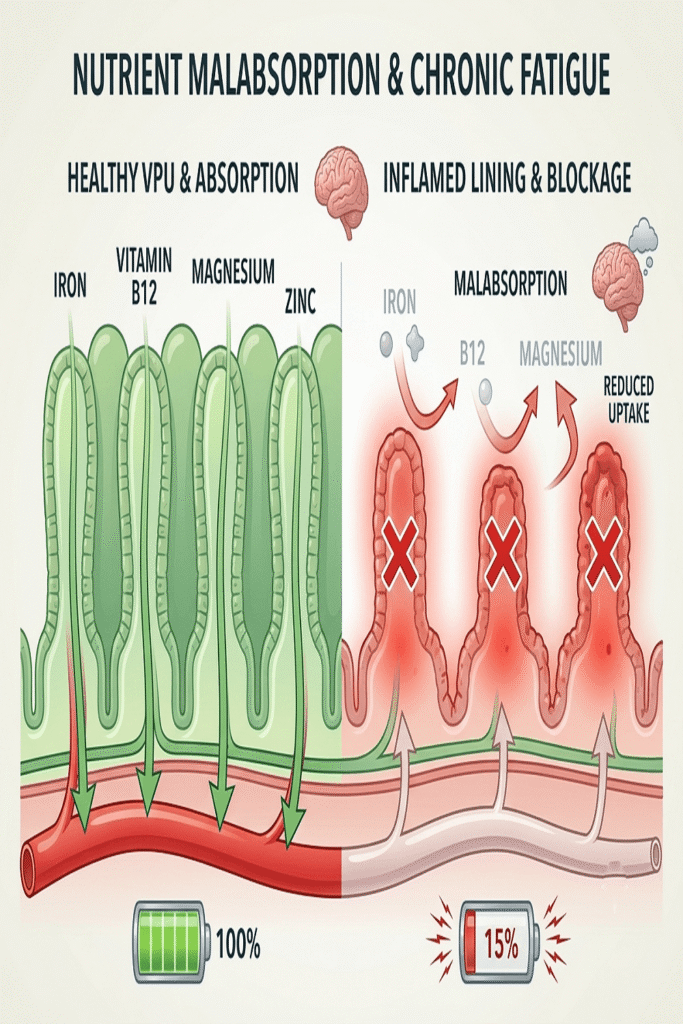
Magnesium – involved in over 300 enzymatic reactions in the body, including the production of ATP, the primary energy currency of every cell. The US diet is already low in magnesium, and gut inflammation further reduces absorption. Low magnesium directly impairs cellular energy production.
Zinc – required for immune function, thyroid hormone conversion, and hundreds of enzymatic reactions. Gut inflammation is one of the most common causes of zinc deficiency even in people eating an adequate diet.
2. Chronic Gut Inflammation
When the gut microbiome is imbalanced, it promotes chronic low-grade inflammation throughout the body.
Inflammation is biologically expensive. Your immune system is running at elevated activation consuming resources and energy that would otherwise be available for normal function.
This is why people with chronic inflammatory conditions (including gut conditions like IBS, leaky gut, and Crohn’s) so often report severe fatigue that is disproportionate to their other symptoms. The immune burden of sustained inflammation has a direct, measurable energy cost.
Research published in clinical immunology journals has identified elevated inflammatory markers in people with chronic fatigue syndromes, with gut microbiome disruption as one of the contributing factors.
3. The Gut-Brain Axis and Mental Fatigue
Physical tiredness and mental tiredness (brain fog, cognitive slowness, the inability to focus) often come together when gut health is poor.
This is because the gut-brain axis connects gut health directly to brain function.
Serotonin – the neurotransmitter most associated with mood and emotional regulation is approximately 90 percent produced in the gut. Gut dysbiosis disrupts serotonin regulation. Low serotonin does not just affect mood; it also affects energy, motivation, and the sense of being able to face the day.
Gut bacteria and brain energy: Research has shown that short-chain fatty acids (SCFAs) produced by gut bacteria fermenting dietary fiber (particularly butyrate) cross into the bloodstream and influence brain energy metabolism directly. People with less diverse gut microbiomes produce fewer SCFAs, and this has measurable effects on cognitive function and mental energy.
Inflammatory cytokines and the brain: When gut inflammation sends inflammatory signals to the brain (a process called neuroinflammation), the brain responds by reducing drive and energy output. This is actually an evolutionary protective response: the body conserving energy during perceived illness. But when the inflammatory signal is chronic and low-grade from gut dysbiosis, it produces the same “sickness behavior” (such as fatigue, low motivation, cognitive slowness) without an obvious illness to point to.
See: The Gut-Brain Connection – How Your Gut Affects Your Mood and Mind
4. Poor Sleep From Gut Dysfunction
The gut microbiome follows a circadian rhythm – a daily biological clock that regulates which bacterial populations are active at which times of day.
When the gut microbiome is disrupted, this rhythm is disrupted too.
Gut bacteria are involved in producing melatonin precursors specifically serotonin, which is converted to melatonin to regulate sleep. Gut dysbiosis affects the quality of this conversion.
Additionally, gut problems that cause nighttime symptoms (acid reflux, nocturnal gut motility issues, gas and discomfort) fragment sleep in ways that never quite show up as “I woke up at 3am.” Instead, sleep becomes less restorative even when you technically stay in bed long enough.
Poor gut health contributes to poor sleep. Poor sleep worsens the gut microbiome’s circadian rhythm. Both contribute to fatigue.
5. The Hypothyroidism-Gut Connection
About 20 percent of thyroid hormone conversion from inactive T4 to active T3 happens in the gut.
When gut inflammation is present, this conversion can be impaired. The result can be functional low thyroid hormone activity (producing fatigue, cold sensitivity, sluggishness, and weight changes) even when thyroid blood tests look normal.
This is why some people with thyroid symptoms who have been told their labs are fine still feel profoundly tired: the conversion issue happens downstream of what standard tests measure. Addressing gut health sometimes resolves or improves this picture.
What to Look For: Signs This Is Gut-Related
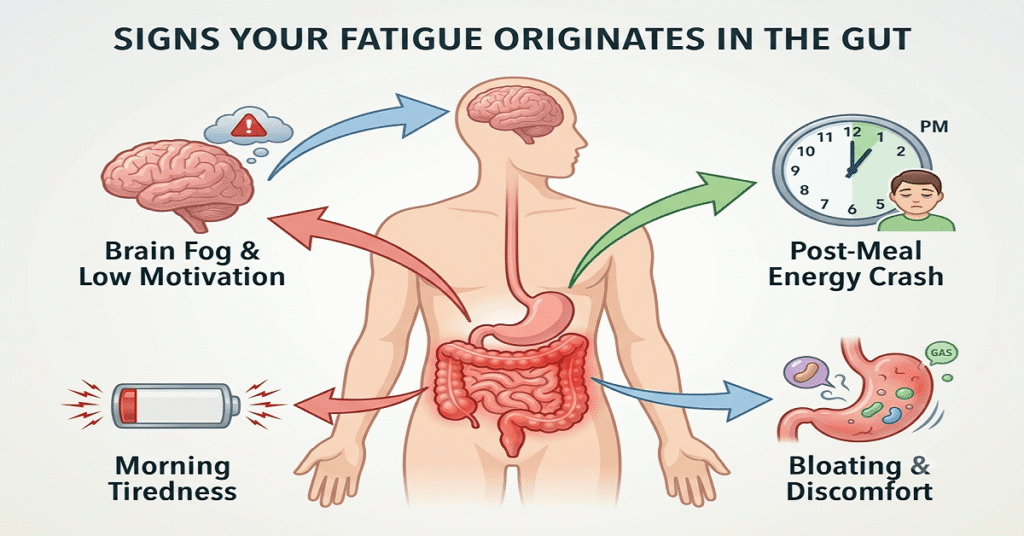
Not all fatigue is gut-related. But these patterns suggest your gut deserves a closer look:
- Fatigue accompanied by digestive symptoms – bloating, irregular bowel habits, or gut discomfort alongside the tiredness
- Fatigue that worsens after meals – a heavy, energy-draining feeling after eating can signal digestive dysfunction
- Morning fatigue despite adequate sleep – particularly when associated with bloating or gut discomfort on waking
- Fatigue alongside brain fog – the combination of physical tiredness and cognitive cloudiness together strongly suggests the gut-brain axis is involved
- Fatigue alongside skin problems, mood changes, or frequent illness – these whole-body signals suggest systemic inflammation with a gut origin
See: Signs Your Gut Is Unhealthy – A Checklist to Assess Yourself
Practical Steps to Address Gut-Related Fatigue
These steps address the specific mechanisms through which gut health drains energy. They overlap almost entirely with general gut health improvements which is one of the reasons improving gut health so often produces energy improvements as a side effect.
Step 1 - Get Basic Labs Done First
Before making dietary changes, ask your doctor for a basic panel that includes:
- Complete blood count (CBC)
- Ferritin and iron studies
- Vitamin B12
- Vitamin D
- Thyroid panel (TSH, free T3, free T4)
- Magnesium (red blood cell magnesium is more accurate than serum magnesium)
- CRP (C-reactive protein) – a marker of systemic inflammation
This gives you a baseline and identifies whether specific deficiencies are present that need direct supplementation alongside dietary changes.
Step 2 - Prioritize Dietary Fiber and Diversity
Fiber is the fuel for the gut bacteria that produce SCFAs, the compounds that directly support brain energy and reduce gut inflammation.
Variety matters here as much as quantity. Aim for at least 5 different plant foods per day from diverse categories (vegetables, fruits, legumes, whole grains, nuts, and seeds).
A 2021 Stanford study published in Cell found that a high-fermented-food diet significantly reduced inflammatory markers compared to a high-fiber diet alone suggesting fermented foods and fiber work better together than either alone.
Step 3 - Add Fermented Foods Daily
Yogurt, kefir, sauerkraut, kimchi, and miso introduce live bacteria that help rebuild a more diverse microbiome and a more diverse microbiome produces more SCFAs, better serotonin regulation, and lower inflammation.
Even one serving per day (a small bowl of yogurt or a glass of kefir) starts making a difference within weeks.
How Long Before You Notice a Difference?
This varies by individual and by the severity of the underlying gut dysfunction.
For most people who make consistent dietary changes:
- Energy during digestion (post-meal heaviness) often improves within 1 to 2 weeks
- Overall daily energy typically improves noticeably within 3 to 6 weeks
- More sustained, stable energy throughout the day tends to develop over 2 to 3 months of consistent gut health habits
The second thing I noticed after my digestion stabilizing was that I was waking up feeling more ready to start the day. Not overnight. But steadily, over the course of about six weeks of eating differently and taking magnesium consistently. It felt like the fog was slowly lifting.
Quick-Reference Summary
| Mechanism | How It Drains Energy | What Helps |
|---|---|---|
| Nutrient malabsorption | Iron, B12, magnesium, zinc not absorbed efficiently | Diverse fiber, fermented foods, targeted supplementation |
| Chronic gut inflammation | Immune activation consumes energy resources | Reduce processed food, add fermented foods and fiber |
| Gut-brain axis disruption | Low SCFAs and serotonin affect mental energy and motivation | Fermented foods, fiber, probiotics |
| Poor sleep from gut dysfunction | Microbiome circadian disruption reduces sleep quality | Consistent sleep schedule, reduce alcohol, address reflux |
| Thyroid conversion impairment | Gut inflammation reduces T4-to-T3 conversion | Reduce gut inflammation through diet |
Frequently Asked Questions
Q: Can gut health cause fatigue?
A: Yes, poor gut health causes fatigue through several distinct mechanisms. These include impaired absorption of iron, B12, and magnesium which are essential for energy production, chronic gut inflammation that creates an ongoing immune energy drain, disrupted gut-brain axis signaling that reduces serotonin and SCFA production, and poor sleep from microbiome circadian disruption. Fatigue is one of the most commonly overlooked symptoms of gut microbiome imbalance.
Q: What gut problems cause tiredness?
A: Gut conditions most commonly associated with fatigue include gut dysbiosis (microbiome imbalance), leaky gut (increased intestinal permeability), IBS particularly IBS with diarrhea, SIBO (small intestinal bacterial overgrowth), and gut conditions that impair nutrient absorption. The common thread in all of them is some combination of nutrient malabsorption, chronic inflammation, and disrupted gut-brain signaling.
Q: How do I know if my fatigue is gut-related?
A: Fatigue is more likely gut-related when it is accompanied by digestive symptoms like bloating, irregular bowel habits, or post-meal discomfort particularly when combined with brain fog, skin problems, frequent illness, or mood changes. Fatigue that worsens after meals or that has been accompanied by expanding food intolerances is another signal worth examining through a gut health lens.
Q: Can probiotics help with fatigue?
A: Probiotics can contribute to reducing gut-related fatigue by improving microbiome diversity, reducing gut inflammation, and supporting serotonin and SCFA production. However, they work best as part of a broader dietary approach, adding fermented foods and fiber alongside probiotic supplementation produces more consistent results than supplements alone.
Q: What vitamins help with gut fatigue?
A: The nutrients most directly relevant to gut-related fatigue are vitamin B12 (particularly if absorption is impaired), magnesium glycinate for cellular energy and sleep, iron if labs confirm deficiency, and vitamin D3 if levels are low. These are best used alongside dietary changes that address the underlying gut dysfunction rather than as standalone fixes.
Further Reading
For readers who want to explore the research:
NIH/PubMed – gut microbiome and chronic fatigue syndrome: Search “gut microbiome chronic fatigue syndrome” for peer-reviewed research on the microbiome composition differences in people with CFS: https://pubmed.ncbi.nlm.nih.gov
Cell – Gut-microbiota-targeted diets modulate human immune status (2021 Stanford): The landmark fermented foods vs fiber study showing reduced inflammatory markers: https://www.cell.com/cell/fulltext/S0092-8674(21)00754-6
Disclaimer: This post is for informational purposes only and is not medical advice. Persistent fatigue should be evaluated by a healthcare provider to rule out underlying medical conditions before attributing it to gut health.