
Signs Your Gut Is Unhealthy - A Checklist to Assess Yourself
Here is something I hear a lot from people who are just starting to look into gut health:
“I have had these symptoms for years. I just thought they were normal.”
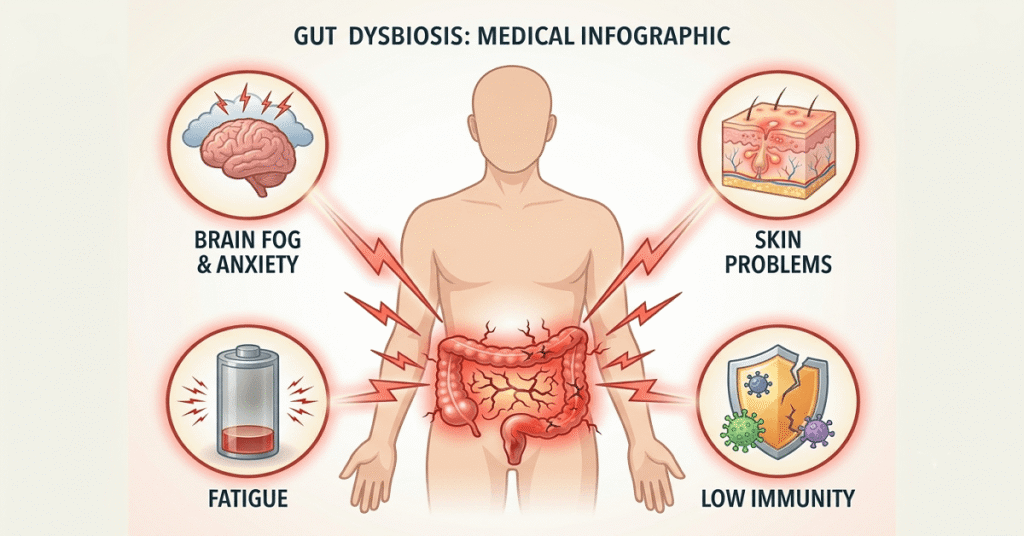
Bloating after most meals. Always tired even after a full night of sleep. Skin that will not clear up no matter what you try. Anxiety that seems to come from nowhere.
These things are common. But common does not mean normal! And they are not things you have to just live with.
A lot of them are signs your gut needs attention.
This checklist is designed to help you figure out where you stand. Go through it honestly. At the end, there is guidance on what your results mean and where to start.
Important note: This checklist is for general informational purposes only. It is not a diagnostic tool. If you have persistent or severe symptoms, please see a healthcare provider. Some gut symptoms can indicate conditions that need proper medical evaluation.
Part 1 - Digestive Symptoms
These are the most obvious signs that something is off in the gut. Check every one that applies to you on a regular basis not just occasionally.
- [ ] Bloating after most meals: your stomach feels full, tight, or swollen after eating, even after moderate-sized meals
- [ ] Frequent gas: more than what feels normal for you, or gas that is particularly foul-smelling
- [ ] Constipation: fewer than three bowel movements per week, or stools that are hard, dry, or difficult to pass
- [ ] Loose stools or diarrhea: frequent loose or watery bowel movements, or unpredictable bathroom urgency
- [ ] Alternating constipation and diarrhea: your bowel habits swing between the two without a clear pattern
- [ ] Stomach cramping or pain after eating: discomfort or pain in the abdomen that often follows meals
- [ ] Heartburn or acid reflux: a burning sensation in the chest or throat, especially after eating or when lying down
- [ ] Feeling like food sits in your stomach for hours: a sense of fullness or heaviness that lingers long after a meal
- [ ] Nausea after eating: particularly after fatty or rich meals
- [ ] Frequent burping: especially if it happens consistently after meals
Your digestive score: __ out of 10
Part 2 - Energy and Mental Symptoms
This is the section most people do not connect to gut health but should. The gut-brain connection is real, and a struggling gut often shows up in how you think, feel, and function.
[ ] Constant fatigue: you are tired even after a full night of sleep, and it is not explained by lifestyle factors
[ ] Brain fog: difficulty concentrating, thinking slowly, forgetting words, or feeling mentally cloudy
[ ] Mood swings or irritability: emotional ups and downs that feel disproportionate
[ ] Anxiety that seems to come from nowhere: a low-level or recurring anxious feeling without a clear situational cause
[ ] Low mood or mild depression: persistent flatness, low motivation, or a general sense of not feeling like yourself
[ ] Trouble sleeping: difficulty falling asleep, staying asleep, or waking unrefreshed
[ ] Poor focus or concentration: struggling to stay on task or think clearly during normal daily activities
Your mental and energy score: __ out of 7
Part 3 - Whole-Body Symptoms
These are signs that gut dysfunction is affecting systems beyond the digestive tract itself: the immune system, the skin, and overall inflammatory load.
[ ] Skin problems: acne, eczema, rosacea, psoriasis, or persistent dullness and breakouts that do not respond well to topical treatments
[ ] Getting sick frequently: more colds, infections, or illnesses than the people around you seem to get
[ ] Food intolerances that keep getting worse: more foods trigger reactions than they used to
[ ] Unexplained joint pain or stiffness: particularly if it moves around or comes and goes without obvious physical cause
[ ] Unexplained weight gain: especially around the abdomen, or difficulty losing weight despite reasonable effort
[ ] Sugar or carb cravings that feel out of control: a persistent drive toward sweet or starchy foods even when you are not genuinely hungry
[ ] Bad breath that does not resolve with good oral hygiene: chronic bad breath can sometimes reflect dysbiosis in the digestive tract
Your whole-body score: __ out of 7
What Your Results Mean
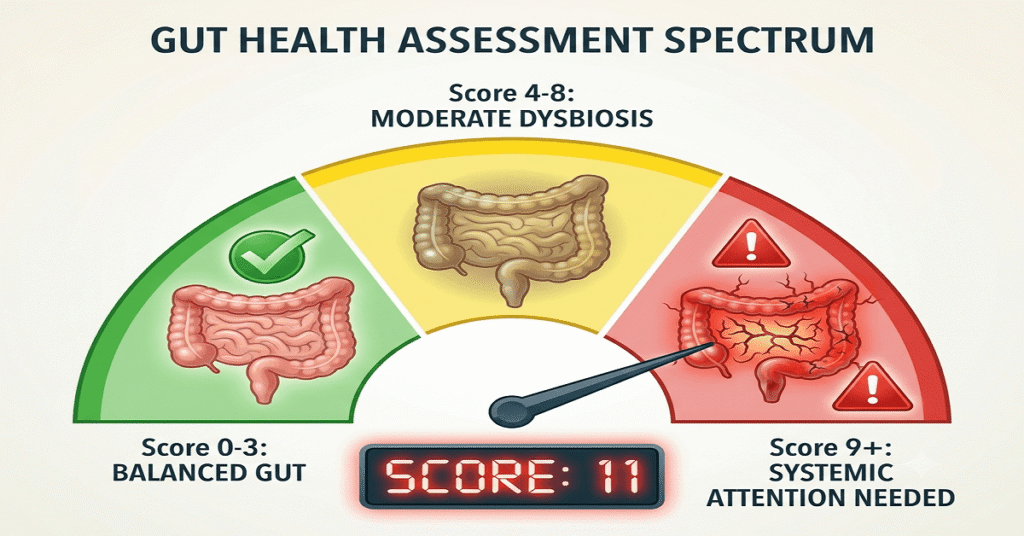
0 to 3 checkmarks total
Your gut is likely in reasonably good shape. Everyone has an off day or an occasional digestive complaint that is normal. If you checked fewer than three boxes, gut dysfunction is probably not a significant issue for you right now.
That said, paying attention to gut health before problems develop is always worthwhile. We believe the best time to invest in gut health is when things are still working well.
4 to 8 checkmarks total
This range suggests your gut microbiome and digestive function could meaningfully benefit from some changes.
You probably have some gut dysbiosis (an imbalance in your gut bacteria) and your digestive system is working harder than it needs to.
The good news is that this range responds very well to dietary improvements. Most people in this category see noticeable changes within 3 to 6 weeks of improving what they eat and how they sleep.
The best place to start: The Gut Health Diet – What to Eat, What to Avoid
9 or more checkmarks total
This many symptoms across multiple categories (digestive, mental, and whole-body) is a strong signal that your gut health needs significant attention.
It also means the effects are reaching beyond your digestive system into your energy, mental clarity, immune function, and more.
Before diving into dietary changes, it is worth seeing a doctor to rule out specific conditions. Persistent symptoms across multiple body systems (especially if they have been going on for months or years) deserve a proper medical evaluation.
If tests come back clear and you are still struggling, a functional medicine practitioner or a registered dietitian with gut health experience can be very helpful.
Start with the full picture here: Gut Health 101 – The Complete Beginner’s Guide
The Symptoms Most People Overlook
Most people know that bloating and irregular bowel movements can signal a gut problem.
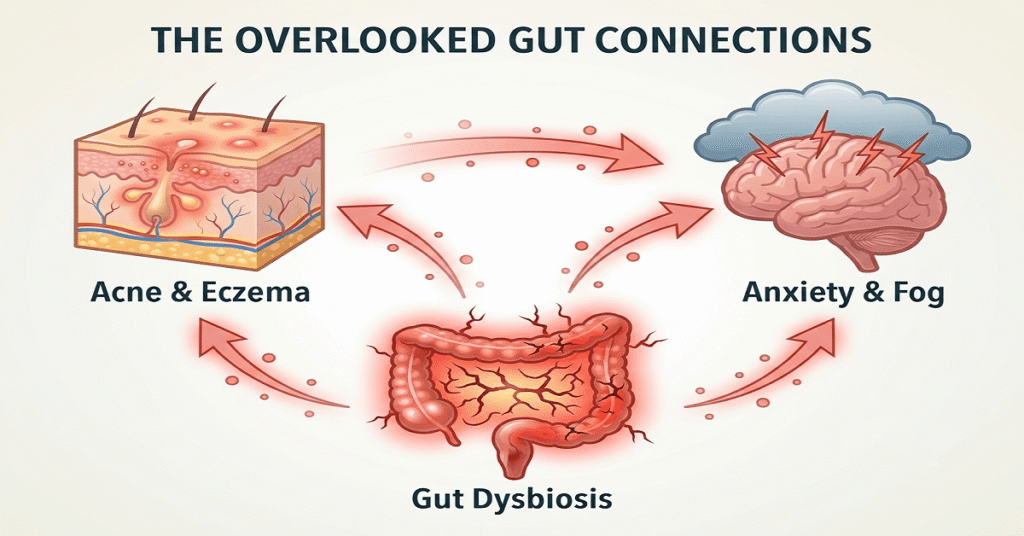
But these three are the ones that consistently get missed and they are worth calling out specifically.
1. Fatigue
Feeling constantly tired for no clear reason is actually one of the most common signs of a sluggish gut and it’s usually the last thing people blame on their digestion!
When your gut lining is damaged or your microbiome is imbalanced, your body absorbs nutrients less efficiently. Vitamins and minerals that your cells need to produce energy simply do not get absorbed properly. Iron, B12, magnesium, and zinc are particularly affected.
The result is real, physical fatigue: the kind that does not improve with more sleep because the problem is not tiredness. It is a nutrient absorption issue.
2. Skin Problems
The gut and skin are connected through the gut-skin axis. When the gut microbiome is disrupted, it triggers systemic inflammation that can manifest on the skin as acne, eczema, or rosacea.
Many people spend years trying topical treatments for skin issues that are actually rooted in gut health. When gut health improves, the skin often follows not always, but frequently enough that it is worth considering.
3. Anxiety or Low Mood
The gut produces about 90 percent of the body’s serotonin (the primary mood-regulating neurotransmitter). It also produces GABA, dopamine precursors, and other brain chemicals through the gut microbiome.
When the microbiome is disrupted, these chemical signals are affected. Anxiety and low mood that have no obvious situational cause are worth examining through a gut health lens.
This was one of the clearest things I noticed in my own gut health journey. My anxiety improved alongside my digestion in a way that felt too consistent to be coincidence and the research strongly supports that connection.
See: The Gut-Brain Connection – How Your Gut Affects Your Mood and Mind
When to See a Doctor
Most of the symptoms on this checklist are signs of common gut dysfunction – uncomfortable and impactful, but not dangerous.
However, some gut symptoms warrant a medical evaluation promptly. Please see a doctor if you experience:
- Blood in your stool or black, tarry stools
- Severe or sudden abdominal pain
- Unexplained weight loss of 10 or more pounds
- Pain that wakes you from sleep
- Persistent vomiting
- Difficulty swallowing
- Any symptoms that are new, worsening, or not improving after consistent dietary and lifestyle changes over 4 to 6 weeks
- New symptoms if you are over 50, or if you have a family history of colorectal cancer or inflammatory bowel disease
These symptoms don’t always mean something major is wrong. But you should definitely get them checked out by a doctor instead of just trying to fix things with food on your own.
Your Next Steps
Once you have a sense of where you stand, here is where to go next depending on what your checklist revealed.
If your symptoms are mostly digestive: Common Gut Health Conditions – Symptoms, Causes, and Natural Relief
If fatigue, brain fog, or mood are your main concerns: The Gut-Brain Connection
If you want to understand the full picture first: Gut Health 101 – The Complete Beginner’s Guide
If you are ready to start changing your diet: The Gut Health Diet – What to Eat, What to Avoid
Frequently Asked Questions
Q: How do I know if my gut is unhealthy?
A: The most common signs of an unhealthy gut include frequent bloating, gas, constipation or diarrhea, stomach pain after eating, persistent fatigue, brain fog, mood changes, skin problems, frequent illness, and worsening food intolerances. Having several of these symptoms regularly is a reliable signal that your gut microbiome and gut lining need attention.
Q: Can poor gut health cause fatigue?
A: Yes, gut health is one of the most overlooked causes of persistent fatigue. When the gut lining is damaged or the microbiome is imbalanced, nutrient absorption becomes less efficient. Deficiencies in iron, B12, magnesium, and other nutrients affect the body’s ability to produce energy. Poor gut health also promotes systemic inflammation, which contributes to fatigue independently of nutrient levels.
Q: Can gut problems cause anxiety?
A: Yes, the gut and brain communicate directly through the vagus nerve and the gut-brain axis. Your gut produces approximately 90 percent of the body’s serotonin and influences GABA and dopamine production. When the gut microbiome is disrupted, these neurochemical signals are affected which can manifest as anxiety, low mood, or irritability without an obvious situational cause. Multiple human studies have found that improving gut health measurably reduces anxiety scores.
Q: Is bloating after every meal normal?
A: Some mild bloating after a large meal can be normal. But regular, significant bloating after most meals (regardless of meal size) is not something you have to accept as normal. It typically signals gut dysbiosis, food intolerances, eating too quickly, SIBO, or IBS. Most people find meaningful relief within a few weeks of identifying and addressing the underlying cause.
Q: How long does it take to improve gut health?
A: The gut microbiome begins responding to dietary changes within 24 to 72 hours. Most people notice improvements in digestion, energy, and bloating within 2 to 4 weeks of consistent dietary changes. More significant improvements (particularly to gut microbiome diversity and gut lining integrity) typically take 2 to 3 months of sustained effort. There is no overnight fix, but progress comes faster than most people expect.
Disclaimer: This checklist is for informational purposes only and is not a diagnostic tool or substitute for medical advice. If you are experiencing persistent or severe symptoms, please consult a qualified healthcare provider.